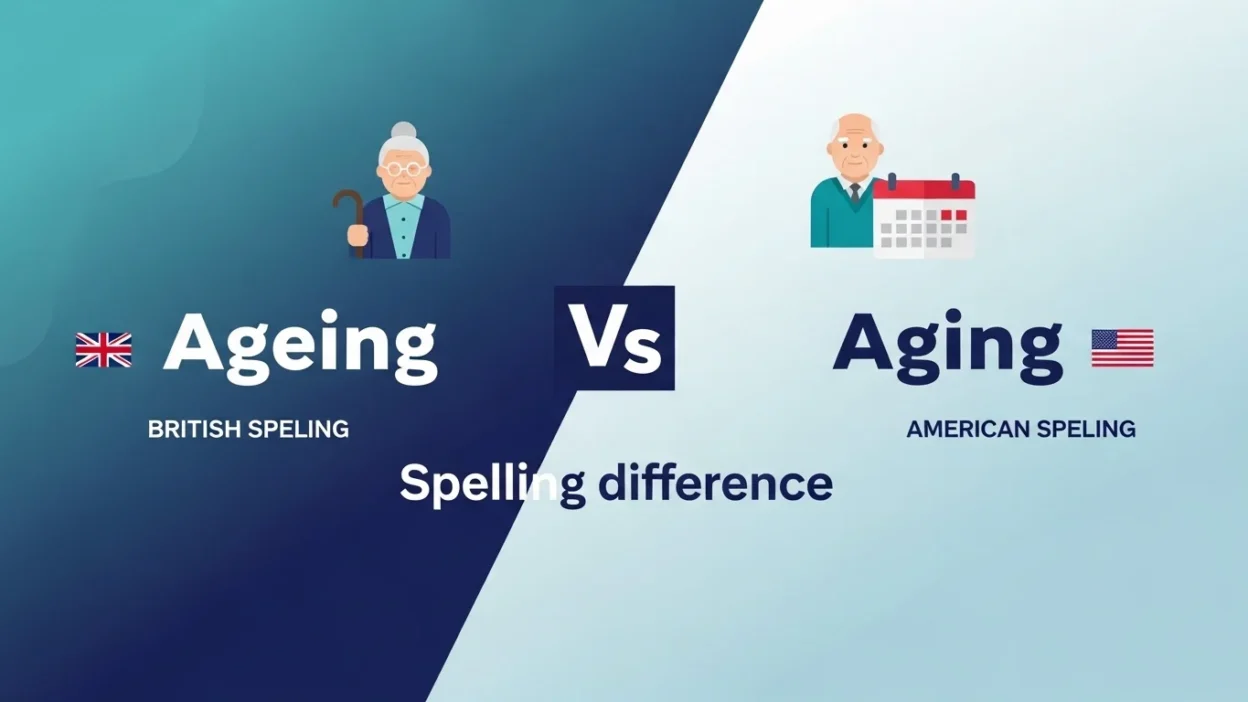
Many English learners get confused when they see ageing and aging used in different books, articles, and websites.
Both words look very similar, and they both talk about the process of growing older.
Because of this, many people wonder which spelling is correct and when they should use each one.
The truth is simple. Ageing and aging have the same meaning, but they follow different spelling styles depending on the type of English you use.
In this guide, you will learn the difference between ageing vs aging, why the spellings are different, and how to use each one correctly in everyday writing.
The explanation is written in very simple English, so students, beginners, and learners can understand it easily.
Quick Answer: Ageing vs Aging
If you want the short and simple answer, here it is.
- Ageing is the British English spelling.
- Aging is the American English spelling.
- Both words mean the process of becoming older.
So, the difference between ageing vs aging is only about spelling style, not meaning.
Example:
- The ageing population is increasing in many countries.
- Scientists study aging to understand how the human body changes over time.
Both sentences are correct. The spelling simply depends on whether you are using British English or American English.
The Origin of the Words Ageing and Aging
To understand the ageing vs aging difference, it helps to look at the base word.
The base word is age, which means the number of years someone has lived.
When we add -ing, we create a word that describes the process of getting older.
However, English spelling rules are not always the same in different countries.
- British English often keeps the letter “e” when adding -ing, which creates ageing.
- American English usually removes the “e”, which creates aging.
Because of this spelling style, both forms exist and are accepted in modern English.
Ageing vs Aging: The Main Difference
The most important thing to remember about ageing vs aging is that they mean the same thing.
The only difference is the spelling style used in different regions.
Ageing
Ageing is mainly used in British English. You will often see this spelling in:
- The United Kingdom
- Australia
- New Zealand
- Canada (sometimes)
Example:
- The government is studying the ageing population.
- Doctors research healthy ageing.
Aging
Aging is mainly used in American English. This spelling is common in:
- The United States
- American research papers
- American news websites
Example:
- Scientists study aging and disease.
- Healthy aging is an important topic in medicine.
So when choosing between ageing vs aging, the decision depends on which type of English you are using.
Ageing vs Aging Comparison Table
Here is a simple table that shows the difference between ageing vs aging.
| Feature | Ageing | Aging |
| Meaning | Becoming older | Becoming older |
| English style | British English | American English |
| Used in | UK, Australia, New Zealand | United States |
| Correct spelling | Yes | Yes |
| Pronunciation | Same | Same |
As you can see, the meaning and pronunciation are exactly the same.
Which One Should You Use?
Choosing between ageing vs aging is easy if you follow one simple rule.
Use ageing if you are writing in British English.
Use aging if you are writing in American English.
Examples:
British English writing:
- The country has an ageing population.
- Scientists study healthy ageing.
American English writing:
- Researchers study aging and health.
- Exercise can slow down aging.
If you are writing for an international audience, either spelling is usually acceptable. The important thing is to stay consistent throughout your writing.
Common Mistakes People Make
Many writers make small mistakes when using ageing vs aging.
Here are the most common ones.
Mixing Both Spellings in the Same Article
Some people write ageing in one sentence and aging in another. This can look unprofessional.
Example (incorrect style):
- The ageing population is growing, and scientists study aging every day.
It is better to choose one style and keep it consistent.
Thinking One Spelling Is Wrong
Another mistake is believing that one spelling is incorrect.
Both ageing and aging are correct. They simply belong to different English styles.
Confusing Ageing with Similar Words
Some learners mix ageing with words like:
- aging process
- aging population
- anti-aging products
These all use the same idea of growing older over time.
Real Life Examples of Ageing vs Aging
Here are some everyday examples where you might see ageing vs aging.
News
- The country is facing challenges because of its ageing population.
Health Articles
- Exercise can slow the effects of aging.
Social Media
- People talk about healthy aging and lifestyle habits.
Science and Research
- Researchers study aging and brain health.
Daily Conversations
- My grandparents are ageing, but they are still very active.
These examples show that the words appear in many different areas of life.
Learning Tips for Students and Beginners
If you are learning English, remembering ageing vs aging can be simple.
Use these tips:
Tip 1: Remember the Region
- Ageing = British English
- Aging = American English
Tip 2: Focus on Meaning
Both words always mean growing older over time.
Tip 3: Stay Consistent
Once you choose a spelling style, use the same one throughout your writing.
These small habits will help you avoid mistakes and write more clearly.
Frequently Asked Questions
Is ageing the correct spelling?
Yes. Ageing is the correct spelling in British English.
Is aging wrong?
No. Aging is correct in American English.
Why do Americans write aging instead of ageing?
American English often drops the letter “e” before adding -ing.
Do ageing and aging mean different things?
No. Both words mean the process of becoming older.
Which spelling should students use?
Students should follow the English style used in their school or country.
Is ageing used in scientific writing?
Yes. British journals often use ageing, while American journals use aging.
Do people pronounce ageing and aging differently?
No. Both words are pronounced the same way.
Conclusion
Understanding the difference between ageing vs aging is actually very simple.
Both words describe the process of growing older, and they have the same pronunciation and meaning.
The only difference is spelling style.
- Ageing is used in British English.
- Aging is used in American English.
As long as you choose one spelling style and use it consistently, your writing will be clear and correct. This small spelling difference is just another example of how English can vary between different parts of the world.

Andrew Christopher is a passionate visionary who blends creativity with purpose to bring ideas to life. With a focus on innovation and integrity, he inspires growth and lasting impact.