Many people feel confused when they see anyway and anyways. They look almost the same, and both seem to mean the same thing.
You may hear both in movies, daily talk, and online posts. Some teachers say only one is correct. Others say both are okay.
So which one should you use?
This guide explains everything in very simple English. By the end, you will clearly understand the difference, the correct mention, and how to use each word with confidence.
Quick Answer
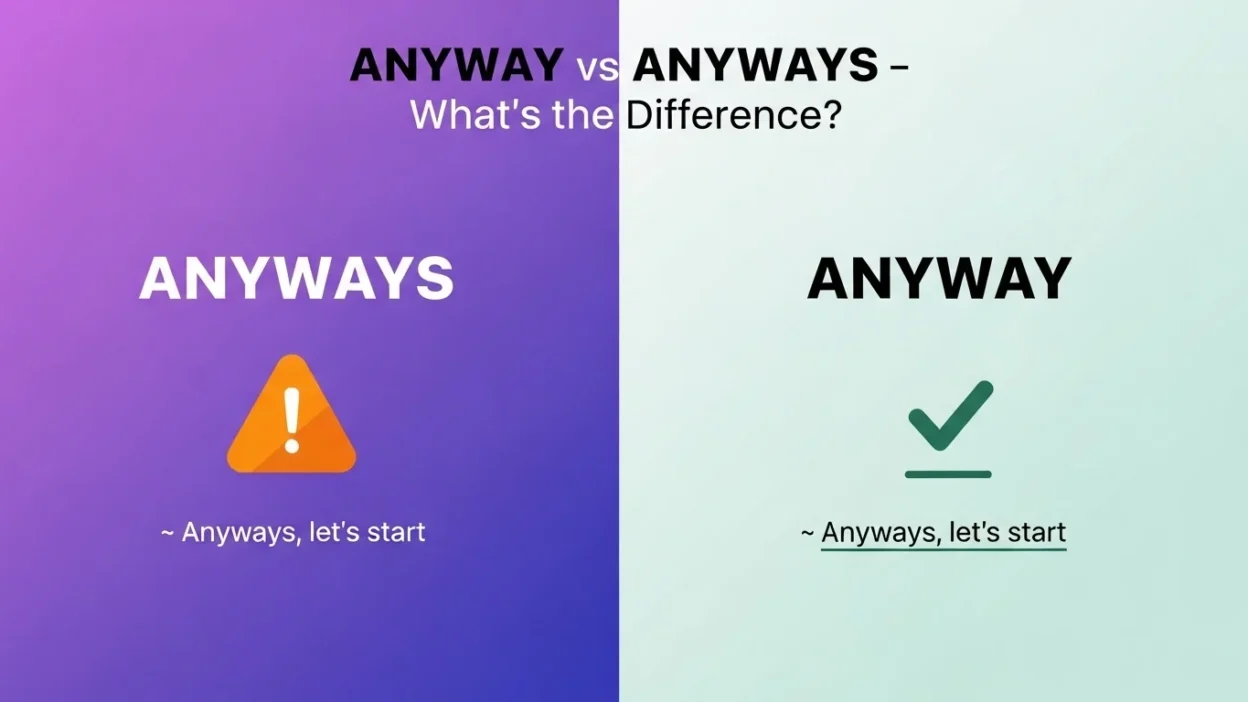
- Anyway is the correct and standard word in English.
- Anyways is informal and mostly used in casual speech, especially in American English.
- In writing, school work, exams, emails, and formal talk, always use anyway.
- If you want to sound clear, correct, and professional, choose anyway.
Simple Background: Where Did These Words Come From?
The word anyway comes from older English and means:
“in any manner,” “no matter what,” or “moving on to another topic.”
Over time, people began adding -s and started saying anyways, just like words such as always or sometimes. This happened mainly in spoken English, not formal writing.
So:
- Anyway → original and correct form
- Anyways → casual spoken form that became popular
Clear Explanation of the Difference
What Does “Anyway” Mean?
Anyway is used to:
- Change the topic
- Show contrast
- Say something will happen no matter what
- Move forward in a conversation
Example meanings:
- No matter what: I will go anyway.
- Changing topic: Anyway, let’s talk about something else.
It is correct in all situations — speaking, writing, school, work, and formal settings.
What Does “Anyways” Mean?
Anyways means the same thing, but it is:
- Informal
- Mostly used in casual speaking
- Common in American everyday talk
It is not recommended for formal writing, school, or professional communication.
Main Difference in Very Simple Terms
- Anyway = correct + formal + safe to use everywhere
- Anyways = casual + spoken + not good for writing
Comparison Table: Anyway vs Anyways
| Feature | Anyway | Anyways |
| Correct English | Yes | Informal |
| Used in writing | Yes | No |
| Used in exams | Yes | No |
| Used in formal emails | Yes | No |
| Used in daily speech | Yes | Yes |
| Grammar-approved | Yes | Not standard |
| Best choice | ✅ Always | ❌ Avoid in writing |
Which One Should You Use and When?
Always Use Anyway When:
- Writing school assignments
- Taking exams
- Writing emails
- Writing articles or stories
- Talking in professional settings
- Speaking formally
Examples:
- I will finish my work anyway.
- Anyway, let’s continue our lesson.
You May Hear Anyways When:
- Friends are talking
- Watching movies or shows
- Listening to casual conversations
- Hearing American spoken English
Example:
- Anyways, I’m going home now.
This is not wrong in casual talk, but avoid using it in writing.
Common Mistakes People Make
Mistake 1: Using “Anyways” in Writing
❌ Anyways, I want to say thank you.
✅ Anyway, I want to say thank you.
Mistake 2: Thinking Both Are Equal in All Situations
Many learners think anyway and anyways are the same in every way. They are not.
- Anyway = correct everywhere
- Anyways = only casual speech
Mistake 3: Using “Anyways” in Exams
In tests, always use “anyway”.
❌ Anyways, the answer is clear.
✅ Anyway, the answer is clear.
Everyday Real-Life Examples
In Emails
- I was busy yesterday. Anyway, I will send the file today.
- Anyway, thank you for your help.
In News Writing
- The weather was bad. Anyway, the event continued.
In Social Media Posts
- Anyway, hope everyone is doing well.
- Anyway, let’s move on.
In Daily Conversation
- I don’t like rain, but I will go anyway.
- Anyway, what are your plans today?
You may hear people say:
- Anyways, let’s go.
But for correct English, say:
- Anyway, let’s go.
Short Learning Section for Students and Beginners
Easy Rule to Remember
If you are ever confused, just use:
👉 ANYWAY
It is always safe, correct, and clear.
Memory Trick
Think:
- Anyway = always okay
- Anyways = only casual talk
Practice Sentences
Try reading and saying these:
- It is late, but I will finish my homework anyway.
- Anyway, thank you for coming.
- Anyway, let’s start the class.
FAQ Section (Simple Questions and Clear Answers)
1. Is “anyways” wrong?
Answer:
It is not wrong in casual speaking, but it is not correct for writing or formal use.
2. Can I use “anyways” in exams?
Answer:
No. Always use anyway in exams.
3. Which one is better for learners?
Answer:
Anyway is better because it is correct, simple, and accepted everywhere.
4. Why do people still say “anyways”?
Answer:
Because it sounds natural in casual talk, especially in American English.
5. Can I use “anyways” in friendly messages?
Answer:
Yes, in very casual messages, but anyway is still safer.
6. Is “anyways” accepted in British English?
Answer:
No. British English strongly prefers anyway.
7. Should I ever write “anyways” in formal writing?
Answer:
No. Always use anyway.
Conclusion
The difference between anyway and anyways is easy when explained clearly.
Anyway is the correct, standard, and safe choice for all situations.
Anyways is informal and mostly used in casual speaking.
If you want to write clear, correct, and professional English, always choose:
👉 ANYWAY
This simple rule will help you avoid mistakes, write better English, and speak with confidence.

Michael is a passionate thinker and visionary creator who turns ideas into action. With focus and integrity, he strives to make every project purposeful and inspiring.