Many people feel confused when they see the words bougie and boujee. They look almost the same.
They sound the same. And people use them in similar ways on social media, in songs, and in daily conversation.
Some people think they mean exactly the same thing. Others believe they are completely different.
This confusion happens because both words come from the same idea, but they are written and used differently today.
Quick Answer: Bougie vs Boujee
Here is the simple answer first:
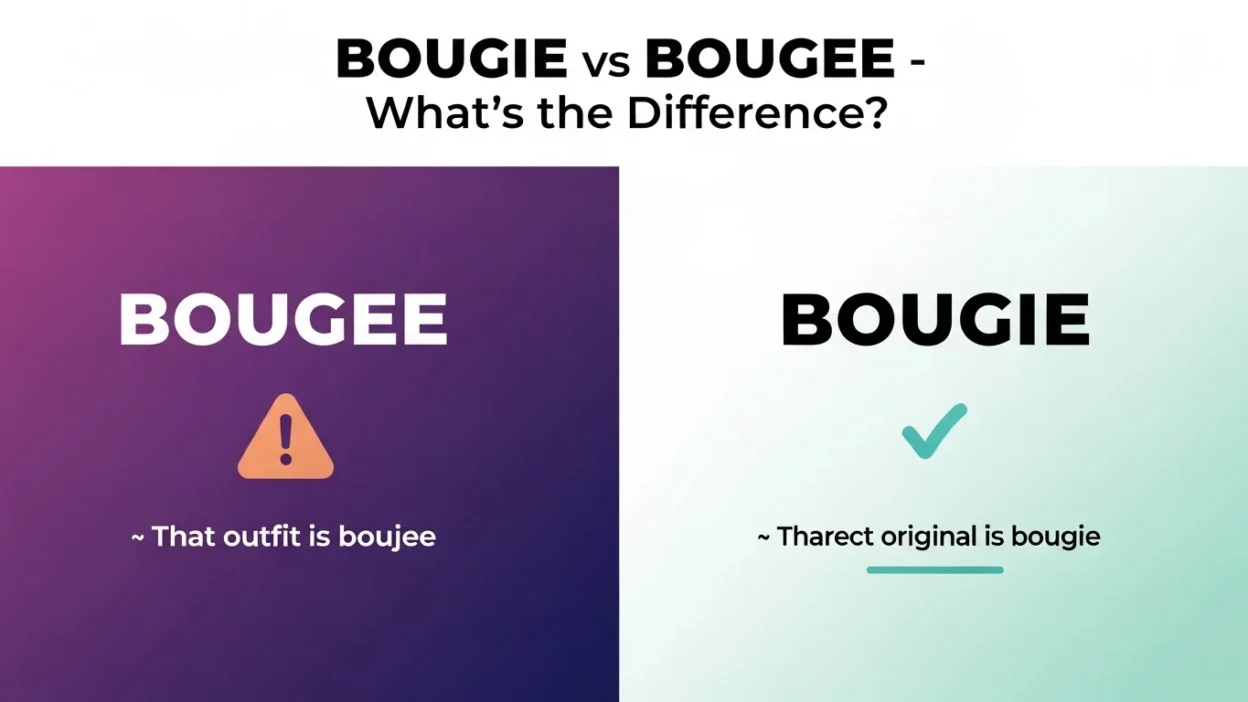
- Bougie = A short form of bourgeois. It means rich, fancy, or high class, often in a serious or neutral way.
- Boujee = A slang spelling of bougie. It means acting rich, loving luxury, or showing off, often in a fun, joking, or playful way.
Very simply:
- Bougie = more formal and original
- Boujee = more modern, slang, and casual
Both usually describe a fancy lifestyle or taste.
Simple Origin and Background
To understand these words better, let’s look at where they came from.
The word bourgeois comes from French. It originally described middle class people who were becoming rich and powerful.
Over time, English speakers shortened bourgeois to bougie.
Later, people began spelling and saying it in a fun, modern way as boujee, especially in:
- Songs
- Social media
- Text messages
- Casual talk
So:
- Bougie is closer to the original word.
- Boujee is a modern slang version.
They sound almost the same, which adds to the confusion.
Clear Explanation of the Difference
Even though bougie and boujee are closely related, they have slightly different feelings and uses.
Bougie
- More traditional
- Slightly formal or serious
- Often used in writing or thoughtful speech
- Describes real wealth, high class, or expensive taste
Example:
She has very bougie taste in clothes and food.
Boujee
- More casual
- More playful or fun
- Very common in slang, music, and social media
- Often describes acting fancy or enjoying luxury, sometimes in a joking way
Example:
I feel so boujee drinking coffee in a gold cup.
In Simple Words
- Bougie = fancy lifestyle
- Boujee = acting fancy in a fun way
Comparison Table: Bougie vs Boujee
| Feature | Bougie | Boujee |
| Spelling | bougie | boujee |
| Style | More formal | More casual |
| Tone | Neutral or serious | Fun, playful |
| Usage | Writing, speech | Slang, social media |
| Feeling | High class, rich taste | Acting rich, stylish |
| Popular in | Articles, formal talk | Songs, memes, texting |
Which One Should You Use and When?
Both words are correct, but the right choice depends on where and how you are speaking or writing.
Use “bougie” when:
- Writing essays or school work
- Writing articles or blogs
- Speaking seriously
- Describing real luxury
Examples:
- That hotel is very bougie.
- They live a bougie lifestyle.
Use “boujee” when:
- Texting friends
- Posting on social media
- Joking
- Talking casually
Examples:
- This pizza makes me feel boujee.
- I’m feeling extra boujee today.
Simple Tip
If you want to sound cool, fun, and modern → use boujee
If you want to sound simple, clear, and proper → use bougie
Common Mistakes People Make
Many learners and even native speakers make mistakes with these words. Let’s look at the most common ones.
1. Thinking They Are Completely Different
They are not completely different. They come from the same word and idea.
2. Using “Boujee” in Formal Writing
“Boujee” is slang, so it should not be used in school essays or serious writing.
Incorrect:
The hotel provides boujee services.
Correct:
The hotel provides bougie services.
3. Wrong Pronunciation
Both words are pronounced the same:
boo zhee
Not:
- boo jee
- bow jee
4. Using Them Only for People
These words can describe things, places, food, clothes, and lifestyles, not just people.
Examples:
- bougie restaurant
- boujee bag
- bougie vacation
Everyday Real Life Examples
Let’s see how people use bougie and boujee in daily life.
1. In Emails
Formal:
The event will offer a bougie dining experience.
Casual:
The dinner tonight is going to be so boujee!
2. In Social Media Posts
- This café is super boujee ☕✨
- Weekend vibes, living that boujee life 😎
3. In Daily Conversation
- She loves bougie clothes.
- He feels boujee wearing his new shoes.
4. In News or Articles
- The hotel offers bougie services for luxury travelers.
5. In Text Messages
- This cake is so boujee, I love it 😍
Short Learning Section for Students and Beginners
Here is a simple way to remember the difference.
Easy Memory Trick
- Bougie → Original + formal
- Boujee → Slang + fun
Practice Sentences
Fill in the blanks:
- This restaurant feels very _______.
- I feel _______ wearing my new jacket.
Answers:
- bougie
- boujee
One Line Rule
Use bougie for serious talk. Use boujee for fun talk.
Frequently Asked Questions (FAQ)
1. Do bougie and boujee mean the same thing?
Yes, they come from the same word and idea. The main difference is style and tone, not meaning.
2. Which spelling is correct?
Both are correct.
- Bougie is the traditional spelling.
- Boujee is modern slang.
3. Which one should students use?
Students should mostly use bougie, especially in school writing.
4. Is boujee a real word?
Yes. It is widely used in modern English, especially in casual speech and online writing.
5. Are these words rude or offensive?
No. But sometimes they can sound joking or teasing, depending on how you use them.
6. Can I use them for food and places?
Yes. You can use them for food, hotels, clothes, parties, and lifestyles.
7. Are bougie and fancy the same?
They are similar. Bougie often means fancy with a rich or luxury feeling.
8. Can I say “very boujee”?
Yes. In casual speech, people often say:
- very boujee
- super boujee
- extra boujee
Conclusion
The confusion between bougie vs boujee is very common, but now it should be clear.
In simple words:
- Bougie is the traditional and slightly formal word for rich, fancy, or high class.
- Boujee is the modern slang spelling that means acting fancy in a fun or playful way.
They come from the same origin and sound the same. The main difference is how and where you use them.
If you remember just one thing, remember this:
Use bougie for serious writing and boujee for fun, casual talk.
Now you can confidently use both words correctly in everyday English.

David Robert is a passionate innovator driven by creativity, vision, and purpose. He turns bold ideas into impactful realities through focus, leadership, and dedication.