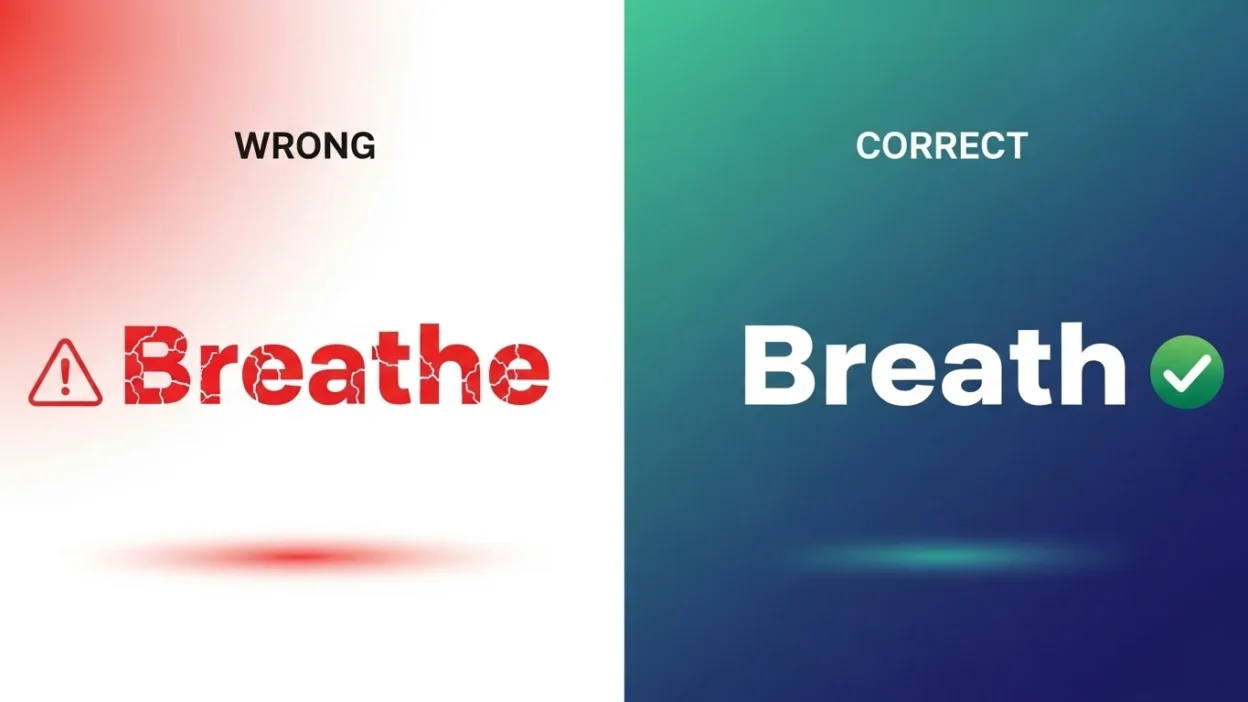
Quick Answer:
Breath is a noun, referring to the air you take in or out of your lungs.
Breathe is a verb, referring to the action of inhaling or exhaling air.
💡 Example:
“Take a deep breath, and breathe slowly to relax.”
Why People Confuse Breath and Breathe
Many learners and even native speakers confuse these words because:
- They sound almost the same.
- One is a thing (noun) and the other is an action (verb).
- Texting and social media often show mistakes like “breathe” used as a noun.
Understanding the difference improves your writing, reading, and speaking English.
Origin and History
- Breath comes from Old English bræth, meaning air exhaled from the lungs.
- Breathe comes from Old English breathan, meaning to inhale or exhale.
Adding -e often changes nouns to verbs in English. Examples:
- Hope → Hoping
- Breath → Breathe
This explains why one is a thing and the other is an action.
Pronunciation Tips
- Breath → /brɛθ/ (short “e”)
- Breathe → /briːð/ (long “ee” sound)
Tip: Pronounce carefully; it helps distinguish noun from verb in speech.
Clear Difference Between Breath and Breathe
| Word | Type | Meaning | Example Sentence |
| Breath | Noun | Air taken in or out | “I need a deep breath before speaking.” |
| Breathe | Verb | Action of inhaling/exhaling | “Remember to breathe slowly during yoga.” |
💡 Memory Trick: Breath = thing, Breathe = action
When to Use Breath vs Breathe
Breath (Noun)
- “Hold your breath under water.”
- “Her breath smelled of peppermint.”
Breathe (Verb)
- “Breathe in deeply before you start singing.”
- “He can’t breathe because of the smoke.”
Common Mistakes to Avoid
❌ “I need to breathe of fresh air.” → Incorrect
✔ “I need a breath of fresh air.” → Correct
❌ “She was short of breathe.” → Incorrect
✔ “She was short of breath.” → Correct
❌ “Take a deep breath and breathe it in slowly.” → Confusing if not clearly separated
✔ “Take a deep breath, and breathe slowly.”
Everyday Real Life Examples
- Emails: “Take a deep breath before responding to the client.”
- Social Media: “Don’t forget to breathe and stay calm.”
- News Articles: “Patients were struggling to catch their breath during the storm.”
- Daily Conversation: “I need a breath of fresh air.” / “Don’t forget to breathe.”
Fun Learning Tips for Learners
- Fill-in-the-blank exercise:
- “I took a deep ______.” → Breath
- “Don’t forget to ______ slowly.” → Breathe
- “I took a deep ______.” → Breath
- Mnemonic Tip:
- Breath → Thing → Noun
- Breathe → Action → Verb
- Breath → Thing → Noun
- Practice with daily sentences and notice pronunciation differences.
Real Life Pop Culture & Literature Examples
- Literature: “He stopped to catch his breath after climbing the hill.”
- Health Articles: “Patients with asthma often find it hard to breathe.”
- Fitness & Yoga: “Breathe deeply to improve oxygen flow.”
- Social Media Hashtags: #TakeABreath, #JustBreathe, #BreathVsBreathe
FAQ Section
What is the difference between breath and breathe?
Breath = noun (air), Breathe = verb (action of inhaling/exhaling).
How do you remember breath vs breathe?
Think: Breath is a thing, Breathe is an action.
Can “breathe” be used as a noun?
No. The correct noun is breath.
Can “breath” be used as a verb?
No. The correct verb is breathe.
How do you use breath in a sentence?
- “Take a deep breath before your speech.”
- “I couldn’t catch my breath after running.”
How do you use breathe in a sentence?
- “Breathe slowly to relax.”
- “It’s hard to breathe in the smoke-filled room.”
Are they pronounced differently?
Yes: Breath → /brɛθ/, Breathe → /briːð/.
Is “breathe of fresh air” correct?
No. Correct usage: “a breath of fresh air.”
Conclusion
Breath vs Breathe is simple if you remember:
- Breath → noun → the air itself
- Breathe → verb → the act of inhaling or exhaling
💡 Example to remember:
“Take a deep breath, and breathe slowly.”
Mastering this difference improves your grammar, writing, and spoken English, especially for learners and beginners.