English can be tricky. Even simple words confuse students and beginners. One common problem is busses vs buses.
People ask: “Which one is correct?” or “Do they mean the same thing?”
This article explains the difference between buses and busses clearly. You will also learn the bus plural, common English mistakes, and simple tips to remember.
Quick Answer
- Bus → One vehicle that carries people.
- Buses → More than one bus (correct bus plural).
- Buss → A kiss (rarely used).
- Busses → More than one kiss (very rare).
Tip: If you are talking about vehicles, always use buses.
Simple Background
- The word bus comes from “omnibus”, meaning “for everyone.”
- Long ago, horse-drawn omnibuses carried people in cities.
- Over time, people shortened it to bus.
- To make more than one, we add -es → buses.
- Busses is mostly old-fashioned for vehicles or can mean kisses.
Memory Tip:
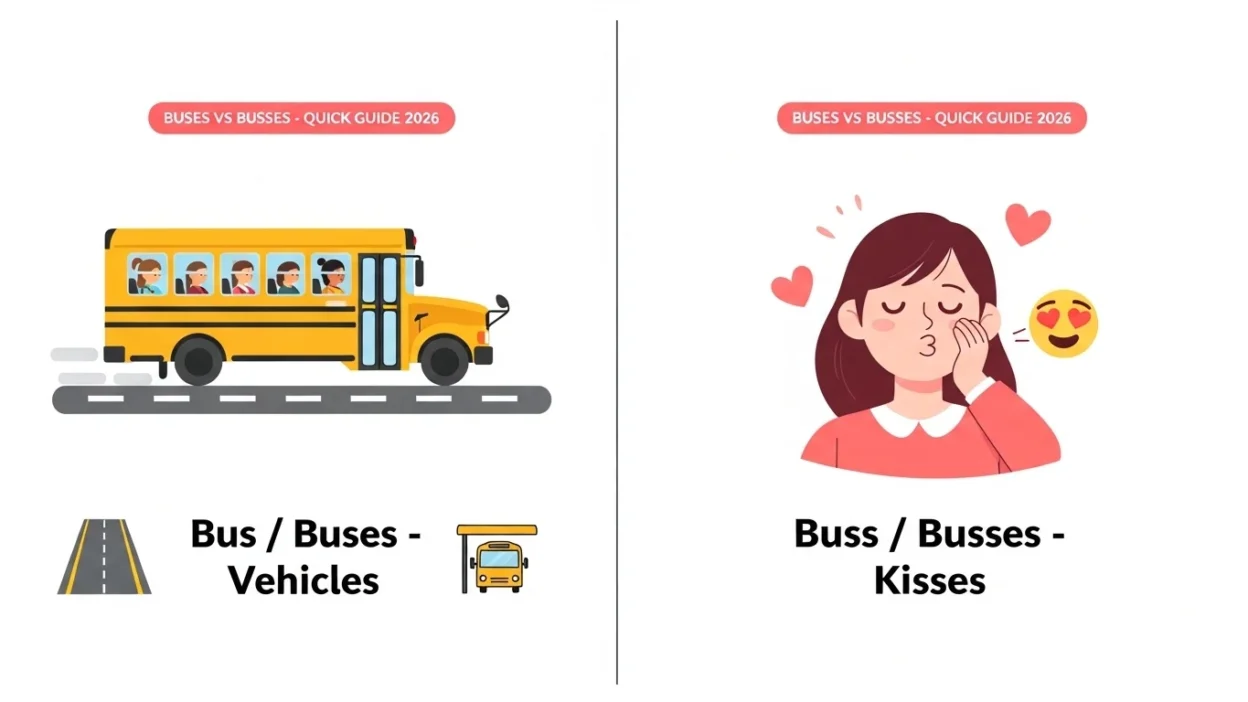
- Bus → Buses → Vehicles
- Buss → Busses → Kisses
Clear Explanation of the Difference
| Word | Meaning | Use Today |
| Bus | A vehicle carrying people | Always correct for transport |
| Buses | More than one bus | Correct bus plural |
| Buss | A kiss | Rarely used today |
| Busses | More than one kiss | Very rare, mostly poetic |
Key Point: When writing about vehicles, use buses, not busses.
Which One to Use and When
- Vehicles: Use bus (singular) or buses (plural).
- Kisses: Use buss or busses, but this is very rare.
- Avoid “busses” for vehicles in modern English—it looks like a mistake.
Examples:
- I take the bus to school every day.
- There are three buses waiting outside.
- He gave his mother two quick busses on the cheek. (rare)
Common Mistakes
- Writing busses when meaning vehicles.
- Mixing buss (kiss) and bus (vehicle).
- Using busses in formal writing for transport.
- Using “bus’s” for plural instead of buses.
Everyday Real Life Examples
Emails:
- Correct: “Please take the bus to the meeting.”
- Incorrect: “Please take the busses to the meeting.”
News Headlines:
- Correct: “City adds new buses to public transport.”
- Incorrect: “City adds new busses to public transport.”
Social Media:
- Correct: “I missed three buses today!”
- Incorrect: “I missed three busses today!”
Daily Life:
- Talking to friends: “Let’s wait for the bus at the corner.”
- School: “All buses are on time today.”
Tip: Visual learners can imagine:
- 🚍 Bus = vehicle
- 😘 Buss = kiss
Short Learning Section for Students and Beginners
- Bus → 1 vehicle
- Buses → 2 or more vehicles (bus plural)
- Buss → 1 kiss
- Busses → more than one kiss (rare)
Memory Trick:
- Think vehicles = buses, kisses = busses. Easy to remember!
FAQ Section
- Can I write “busses” for vehicles?
No. Use buses. - Why do some dictionaries show “busses”?
It is old-fashioned or used for kisses. - Is “bus” only for big vehicles?
Usually yes, but it can include school or city vans. - Can “buss” still mean a kiss?
Yes, but it is rare today. - How do you pronounce “buses” and “busses”?
Both sound the same: /ˈbʌsɪz/. Context matters. - What about American vs British English?
Both use buses for vehicles. Busses is rare. - Is “bus’s” ever correct?
Yes, only for singular possessive: “The bus’s door is broken.” - Can I say “omnibus”?
Not in daily English. Bus is simpler.
Conclusion
The rule is simple:
- Bus → one vehicle
- Buses → more than one vehicle (bus plural)
- Busses → only kisses, rare
- Buss → one kiss
Now you can confidently write, read, and speak about buses.
Remember: When talking about transport, always choose buses!

Daniel Matthew is a passionate visionary who believes in creativity, purpose, and innovation. With a focus on growth and authenticity, he turns every idea into meaningful impact.