Quick Answer
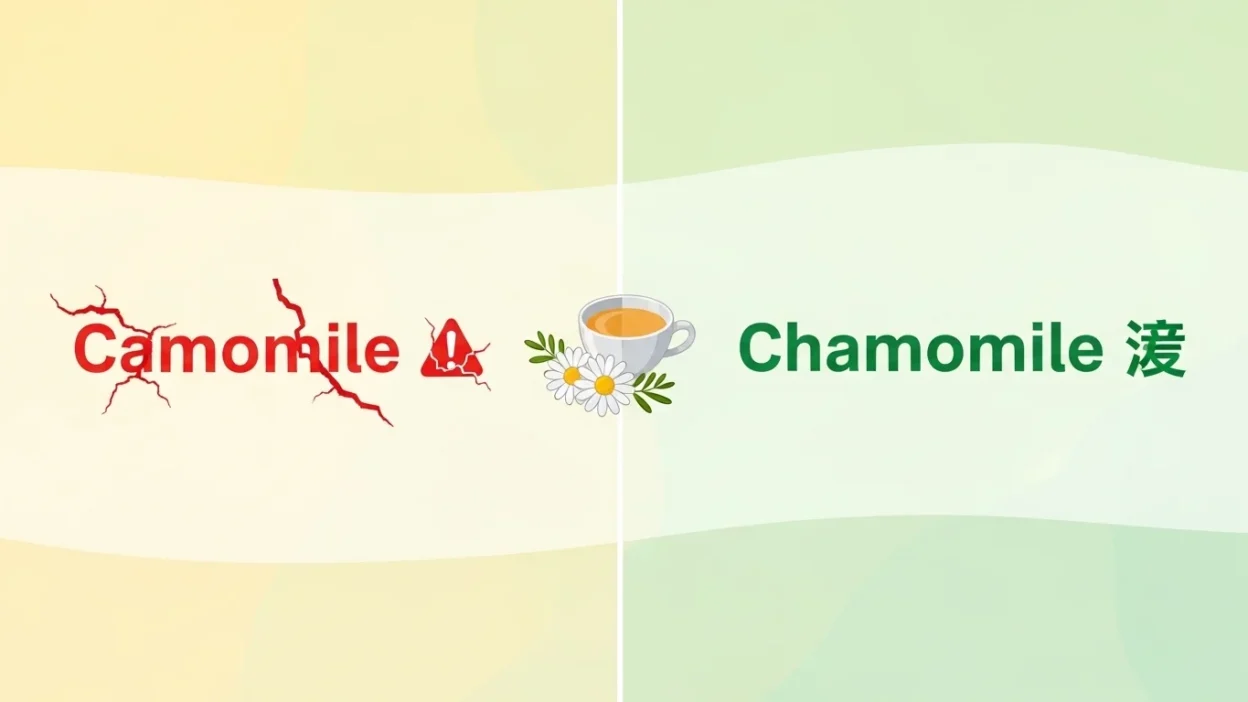
Camomile or Chamomile – which is correct?
- Chamomile ✅ – the standard, modern spelling used worldwide in recipes, health articles, and everyday English.
- Camomile ✨ – an alternative spelling, mostly British or older style, less common today.
- Both words refer to the soothing herb used in teas, remedies, and herbal medicine.
Tip: Use chamomile in modern writing and recipes; camomile is fine for historical texts or British contexts.
If you’ve ever wondered “camomile or chamomile, which is correct?”, you’re not alone. Many students, learners and beginners get confused because both words sound the same and refer to the same plant.
You may notice:
- Camomile on older packaging or British websites
- Chamomile in American English recipes, wellness articles, and modern dictionaries
This article explains:
- The difference between camomile and chamomile
- Their meaning and correct spelling
- How to use them in recipes, health texts, and daily English
By the end, you will confidently know which spelling to use in any situation.
Chamomile Meaning
Chamomile is a herb commonly used for teas and herbal remedies. It is famous for:
- Calming effects
- Helping with sleep and relaxation
- Reducing stress and digestion issues
Example sentences with chamomile:
- I like drinking chamomile tea before bedtime.
- Chamomile flowers have a sweet, apple-like scent.
- The wellness store sells organic chamomile products.
Camomile Meaning
Camomile is an alternative spelling of chamomile, mainly used in British English or historical texts.
Example sentences with camomile:
- She brewed camomile tea for her grandmother.
- The old garden had a patch of camomile.
- In 19th-century herbal guides, camomile was used for digestion.
Origin of Camomile and Chamomile
The word comes from Greek “chamaimēlon”, meaning “ground apple,” referring to the plant’s apple-like scent.
- Chamomile → modern, standard spelling in dictionaries worldwide
- Camomile → older or British English spelling
Both spellings refer to the same medicinal and culinary herb.
Camomile vs Chamomile Comparison Table
| Feature | Chamomile | Camomile |
| Common spelling | ✅ Modern English | ✨ Older/British English |
| Meaning | Herb used in teas, remedies, and medicine | Same as chamomile |
| Informal writing | ✅ Yes | Less common |
| Dictionaries | ✅ Modern/US & UK | ✅ UK / historical |
| Example sentence | I drank chamomile tea. | She brewed camomile tea. |
Camomile vs Chamomile in Recipes and Regions
- Chamomile → used in American English recipes, wellness blogs, and international texts
- Camomile → mainly British English or historical references
Example:
- Chamomile: I like a cup of chamomile tea before sleeping.
- Camomile: The Victorian cookbook called for dried camomile flowers.
When to Use Chamomile or Camomile
Use Chamomile When:
- Writing recipes or food blogs
- Writing health, wellness, or modern herbal articles
- Using modern English internationally
Use Camomile When:
- Writing in British English or historical texts
- Quoting older herbal books or literary works
- Trying to evoke a traditional or nostalgic tone
Common Mistakes
- Spelling camomile in American English – prefer chamomile.
- Assuming camomile is a different plant – it’s the same herb.
- Pronunciation confusion – both are pronounced /ˈkæməˌmiːl/.
Everyday Examples
Recipes & Teas
- Add a teaspoon of chamomile to your tea for relaxation.
- Herbalists use camomile in traditional tinctures.
Text Messages
- I’m drinking chamomile tea to relax tonight.
- My grandmother always prefers camomile tea from her garden.
Health Articles
- Chamomile can aid sleep and digestion.
- Historical guides recommend camomile for calming effects.
Learning Tips for Students and Beginners
Easy trick to remember:
- Chamomile = modern, standard spelling → everyday writing, recipes, articles
- Camomile = older or British spelling → historical or literary use
Mnemonic: “Chamomile today, Camomile yesterday.”
Frequently Asked Questions (FAQ)
1. Is it camomile or chamomile?
Both are correct. Chamomile is modern and widely used; Camomile is older or British.
2. How do you pronounce camomile or chamomile?
Both are pronounced /ˈkæməˌmiːl/.
3. Can I use camomile in recipes?
Yes, but chamomile is preferred in modern texts.
4. Is chamomile used in medicine?
Yes, it’s widely used in teas, herbal remedies, and wellness products.
5. Are camomile and chamomile the same plant?
Yes, both refer to the same herb.
6. Example sentence with chamomile?
- I like drinking chamomile tea before bed.
7. Example sentence with camomile?
- The 1800s herbal book mentioned camomile for digestion.
8. Benefits of chamomile tea?
- Helps with sleep, stress, and digestion.
Conclusion
The confusion between camomile or chamomile exists because both spellings are correct.
Key points:
- Chamomile ✅ → modern, standard, widely used spelling
- Camomile ✨ → older, British, or historical spelling
- Both refer to the same soothing herb used in teas and medicine
By following these rules, you can confidently use chamomile or camomile in recipes, health articles, or daily writing.

Michael is a passionate thinker and visionary creator who turns ideas into action. With focus and integrity, he strives to make every project purposeful and inspiring.