Many English learners get confused by words that sound the same but have different spellings and meanings. A common example is crummy vs crumby.
People often ask:
- Crummy or crumby — which spelling is correct?
- What is the difference between crummy and crumby?
- When should I use crummy or crumby in English?
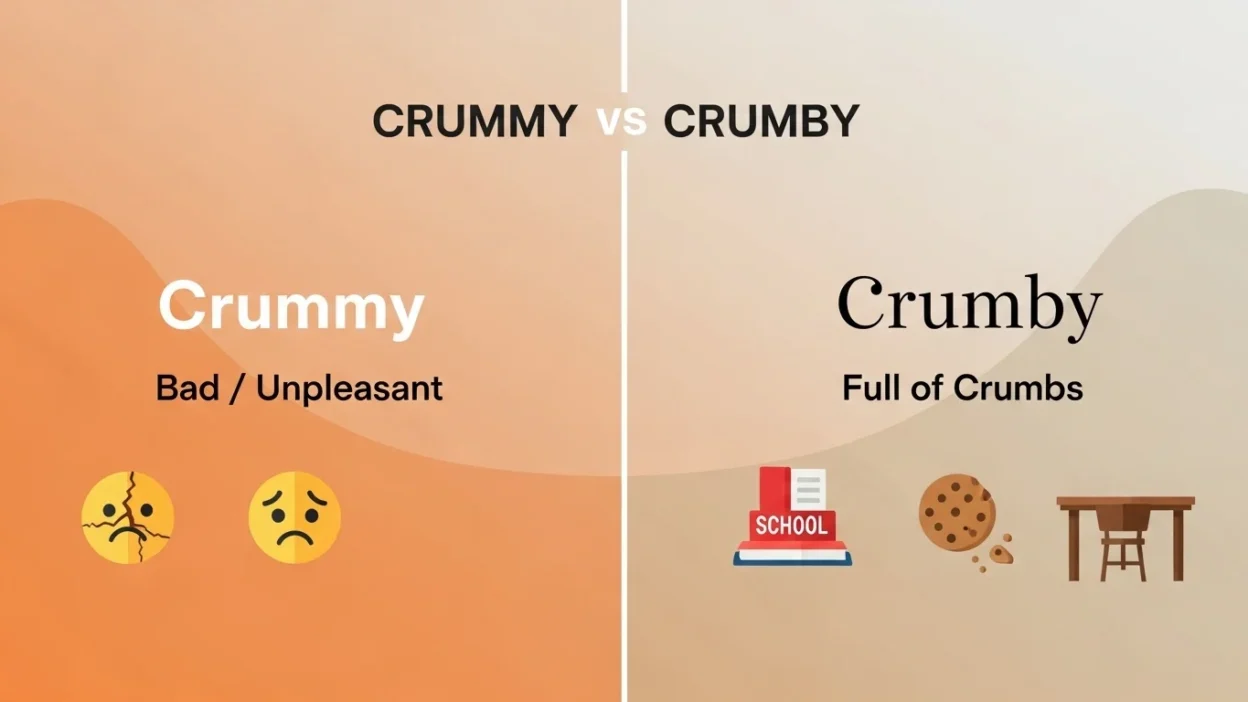
Both words come from crumb, but over time their meanings diverged. Crummy is used to describe something bad or unpleasant, while crumby refers to something covered in crumbs.
This article will give you a clear explanation, examples, pronunciation, and tips to use these words confidently in writing and speaking.
Quick Answer: Crummy vs Crumby
- Crummy → bad, unpleasant, or poor quality
- Crumby → full of crumbs or covered with crumbs
- Both words sound the same but are used differently
Examples:
- I had a crummy day at work.
- The table is crumby after eating cookies.
Tip: Remember, crummy = negative experience, crumby = crumbs.
Dictionary Style Definitions
Crummy (adjective):
Something that is bad, unpleasant, of low quality, or disappointing. Often used in informal English.
Crumby (adjective):
Something that contains or is covered with crumbs. Usually refers to food or surfaces.
Pronunciation
Both words are pronounced the same:
/KRUM-ee/
Because they sound identical, crummy and crumby are homophones.
Are Crummy and Crumby Homophones?
Yes. Homophones are words that sound the same but have different meanings and spellings.
- Crummy → negative feeling or poor quality
- Crumby → physical crumbs
Knowing this helps learners avoid spelling mistakes in writing.
Crummy vs Crumby: The Main Difference
| Feature | Crummy | Crumby |
| Meaning | Bad, unpleasant, low quality | Full of crumbs |
| Usage | Informal speech and writing | Literal description (food or surfaces) |
| Commonality | Very common | Rare |
| Example | crummy day, crummy service | crumby cookie, crumby table |
| Type of meaning | Emotional / opinion | Physical / literal |
Summary:
- Crummy = poor quality or disappointing
- Crumby = literally covered with crumbs
When to Use Crummy
Use crummy when talking about unpleasant situations, poor quality, or disappointment.
Examples:
- I had a crummy morning at school.
- The hotel gave us crummy service.
- That was a crummy excuse for being late.
Tip: Crummy is informal but widely used in both spoken and written English.
When to Use Crumby
Use crumby when talking about crumbs, messy food, or surfaces.
Examples:
- The table is crumby after lunch.
- This cookie is very crumby.
- My shirt became crumby after breakfast.
Crumby is less common and almost always literal.
Expanded Real Life Examples
Everyday Conversation
- Today was a crummy day, but tomorrow will be better.
- The movie had a crummy ending.
Food Situations
- These cookies are very crumby.
- The counter is crumby after breakfast.
Work and School
- The report was crummy and needed revision.
- I had a crummy experience with my group project.
Social Media Example
- I had a crummy day, but a good coffee helped.
- My desk is crumby after eating a muffin.
Context Usage: Crummy vs Crumby
Crummy is usually:
- Informal English
- Emotional or opinion-based
- Common in speech
Crumby is usually:
- Literal or physical
- Food or surfaces
- Rarely used outside literal crumbs
Related Words
- Crumb – a small piece of bread
- Crumbly – easily breaking into crumbs
- Crummy – bad or low quality
Understanding these related words helps learners remember the difference between crummy and crumby.
Memory Trick for Students
Crumby → crumbs
Crummy → bad / unpleasant
This simple trick helps you choose the right word every time.
Practice Sentences
- The airline gave us crummy service.
- The table is crumby after breakfast.
- That was a crummy excuse for being late.
- This cookie is very crumby.
Frequently Asked Questions (FAQ)
1. What is the difference between crummy and crumby?
Crummy = bad, unpleasant; Crumby = full of crumbs.
2. Are crummy and crumby homophones?
Yes. They sound the same but have different meanings.
3. Which spelling is more common?
Crummy is far more common in modern English.
4. Can crummy describe food?
Yes, but only to describe bad-quality food, not crumbs.
Example: This sandwich tastes crummy.
5. Can crumby describe a messy table?
Yes. Crumby is used for crumbs or surfaces with small pieces of food.
6. Is crumby correct English?
Yes, it’s correct but rarely used outside literal crumbs.
7. Why do people confuse crummy and crumby?
Because they sound identical and both come from the word crumb.
8. Should I use crummy or crumby more often?
Most of the time, crummy is used in everyday speech and writing.
Conclusion
Understanding crummy vs crumby is simple if you remember:
- Crummy → bad, unpleasant, poor quality
- Crumby → full of crumbs
Most English speakers use crummy in everyday situations, while crumby is used literally for food or crumbs.
With this guide, you now know crummy vs crumby meaning, examples, pronunciation, and usage, so you can confidently use the correct word in writing and conversation.

Daniel Matthew is a passionate visionary who believes in creativity, purpose, and innovation. With a focus on growth and authenticity, he turns every idea into meaningful impact.