Many people feel confused about deep seeded vs deep seated because the two phrases look and sound very similar. You may see both used in articles, social media posts, or everyday writing.
However, only one of these expressions is considered correct in standard English.
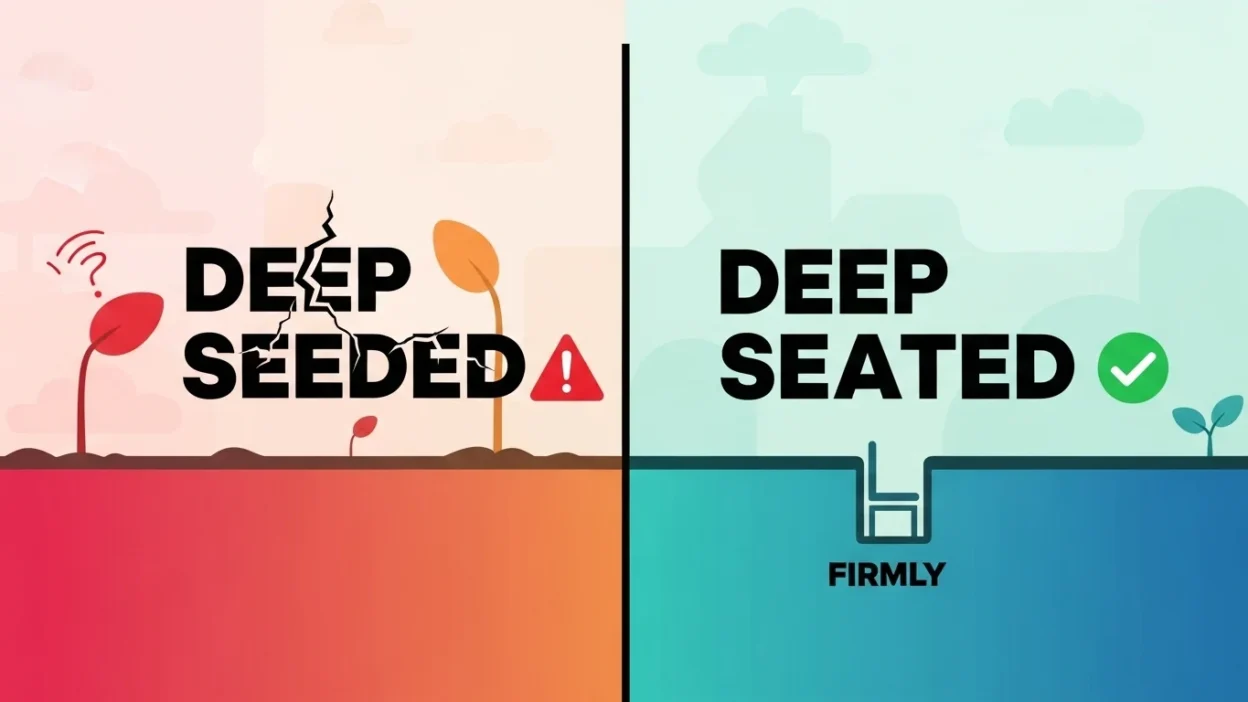
Deep seated is the correct phrase and means something that is strongly rooted or firmly established.
Deep seeded is usually a mistaken version of the phrase.
For example:
- ✔ She has a deep seated fear of failure.
- ❌ She has a deep seeded fear of failure.
In this guide, you will learn:
- the difference between deep seeded and deep seated
- the deep seated meaning and definition
- why people mistakenly say deep seeded
- examples of deep seated in a sentence
- how to remember the correct phrase easily
Everything is explained in clear and simple English so students, ESL learners, and beginners can understand it quickly.
Quick Answer: Deep Seeded vs Deep Seated
Here is the simple answer.
- Deep seated → correct phrase
- Deep seeded → usually incorrect
Deep seated meaning: something that is deeply rooted, strongly established, and difficult to change.
Examples:
- He has a deep seated fear of public speaking.
- The country faces deep seated economic problems.
Many people mistakenly write deep seeded, but the correct expression is deep seated.
The Origin of the Phrase Deep Seated
Understanding the history of a phrase can help you remember its correct form.
The word “seated” comes from the word seat, which means to place something firmly in position.
In older English, something that was deeply seated was firmly fixed or settled deep in place.
Over time, the phrase deep seated became common in English to describe things like:
- emotions
- beliefs
- fears
- social or personal problems
These things are often strong and difficult to change, which is why the phrase is still used today.
Deep Seated Meaning and Definition
The deep seated definition is simple and easy to remember.
Deep seated means:
- strongly rooted
- firmly established
- difficult to change
It is usually used to describe emotions, attitudes, beliefs, or problems that have existed for a long time.
Examples of Deep Seated in a Sentence
- She has a deep seated fear of heights.
- There are deep seated political tensions in the region.
- His deep seated beliefs influence his decisions.
- The company faces deep seated management problems.
These examples show that deep seated problems or feelings are serious and long lasting.
Deep Seeded Meaning
Some people believe the phrase should be deep seeded because the word seed suggests growth.
A seed grows into a plant, so people think deep seeded means something that started small and grew stronger over time.
However, in standard English grammar and dictionaries, deep seeded is usually considered incorrect.
❌ He has a deep seeded hatred of dishonesty.
Correct sentence:
✔ He has a deep seated hatred of dishonesty.
This mistake happens because seed and seat sound very similar when spoken.
Deep Seeded vs Deep Seated: Key Difference
The difference between deep seeded and deep seated is mainly about correct usage.
| Phrase | Meaning | Usage |
| deep seated | strongly rooted or firmly established | correct phrase |
| deep seeded | mistaken form of the phrase | usually incorrect |
Quick Grammar Rule
Use “deep seated” when something is firmly established or difficult to change.
Avoid using deep seeded in formal writing.
Correct vs Incorrect Usage Examples
This section makes the difference very clear.
| Sentence | Correct or Incorrect |
| She has a deep seated fear of failure. | ✔ Correct |
| He has a deep seeded fear of failure. | ❌ Incorrect |
| The country has deep seated political problems. | ✔ Correct |
| The country has deep seeded political problems. | ❌ Incorrect |
If you remember this comparison, you will never confuse the phrases again.
When to Use Deep Seated
Use deep seated when describing feelings, beliefs, or problems that are strong and long lasting.
It is commonly used with words like:
- fear
- anger
- hatred
- resentment
- beliefs
- problems
Examples
- She has a deep seated fear of flying.
- There is deep seated resentment between the two groups.
- The community faces deep seated economic problems.
- He has deep seated trust issues.
These examples show the correct usage of deep seated in everyday English.
Common Phrases With Deep Seated
Many common expressions use this phrase.
Here are some frequently used examples:
- deep seated fear
- deep seated hatred
- deep seated resentment
- deep seated anger
- deep seated beliefs
- deep seated prejudice
- deep seated problems
These phrases appear often in news articles, books, and conversations.
Why People Say Deep Seeded
Many people ask: Why do people say deep seeded instead of deep seated?
There are two main reasons.
1. The Word “Seed” Feels Logical
Seeds grow over time, so people think the phrase should describe something that started small and grew stronger.
2. The Words Sound Similar
When spoken quickly, deep seated can sound like deep seeded, which causes confusion.
Because of these reasons, deep seeded has become a very common mistake.
Everyday Examples of Deep Seated
In Daily Conversation
- He has a deep seated dislike of dishonesty.
- She has a deep seated fear of public speaking.
In Emails
- This issue appears to be deep seated and may require serious changes.
In News Articles
- The region struggles with deep seated political tensions.
On Social Media
- Many people develop deep seated trust issues after bad relationships.
These examples show how the phrase is used in real life communication.
Easy Learning Tips for Students
Here are simple ways to remember the deep seeded vs deep seated difference.
Tip 1: Think of Something Sitting Deep
Imagine something sitting firmly in a seat deep inside the ground.
That is why the phrase is deep seated.
Tip 2: Remember the Grammar Rule
Correct: deep seated
Incorrect: deep seeded
Tip 3: Practice With Sentences
Practice helps students remember the correct phrase.
Examples:
- She has a deep seated fear of spiders.
- The country faces deep seated economic challenges.
Frequently Asked Questions (FAQ)
1. What is the difference between deep seeded and deep seated?
Deep seated is the correct phrase meaning something strongly rooted.
Deep seeded is usually considered incorrect.
2. Is it deep seated or deep seeded?
The correct expression is deep seated.
3. What does deep seated mean?
The deep seated meaning is something that is firmly established or difficult to change.
4. Is deep seeded ever correct?
In most cases, deep seeded is considered a mistake in standard English.
5. Why do people say deep seeded?
People often confuse the words because seed and seat sound similar, and the idea of a seed growing seems logical.
6. How do you use deep seated in a sentence?
Example:
He has a deep seated fear of failure.
7. What are common phrases with deep seated?
Common examples include:
- deep seated fear
- deep seated hatred
- deep seated resentment
- deep seated beliefs
Conclusion
The confusion between deep seeded vs deep seated is very common, but the rule is simple.
- Deep seated is the correct phrase.
- It means something that is strongly rooted or firmly established.
- Deep seeded is usually a mistaken version of the phrase.
Examples to remember:
- She has a deep seated fear of failure.
- The country faces deep seated problems.
- His deep seated beliefs influence his actions.
A helpful memory tip is this:
Deep seated is correct because the idea is something firmly “seated” in place.
Once you remember this rule, you will always use the correct phrase in your writing.

Daniel Matthew is a passionate visionary who believes in creativity, purpose, and innovation. With a focus on growth and authenticity, he turns every idea into meaningful impact.