Many students, learners, and general readers feel confused when they see the words gray and grey. These two words look almost the same, sound exactly the same, and have the same meaning. Because of this, people often ask:
- What is the difference between gray and grey?
- Is it gray or grey?
- Which spelling is correct?
- Should I use gray or grey in writing?
This confusion is completely normal. Even native English speakers sometimes hesitate before choosing the spelling.
The good news is that both spellings are correct. The difference is not in meaning but in language style.
In this guide, you will learn everything about gray vs grey in very simple English.
You will understand their meaning, spelling rules, usage, examples, formal writing tips, and international differences. By the end, your confusion will be fully cleared.
Quick Answer: Gray vs Grey
Here is the simple and direct answer:
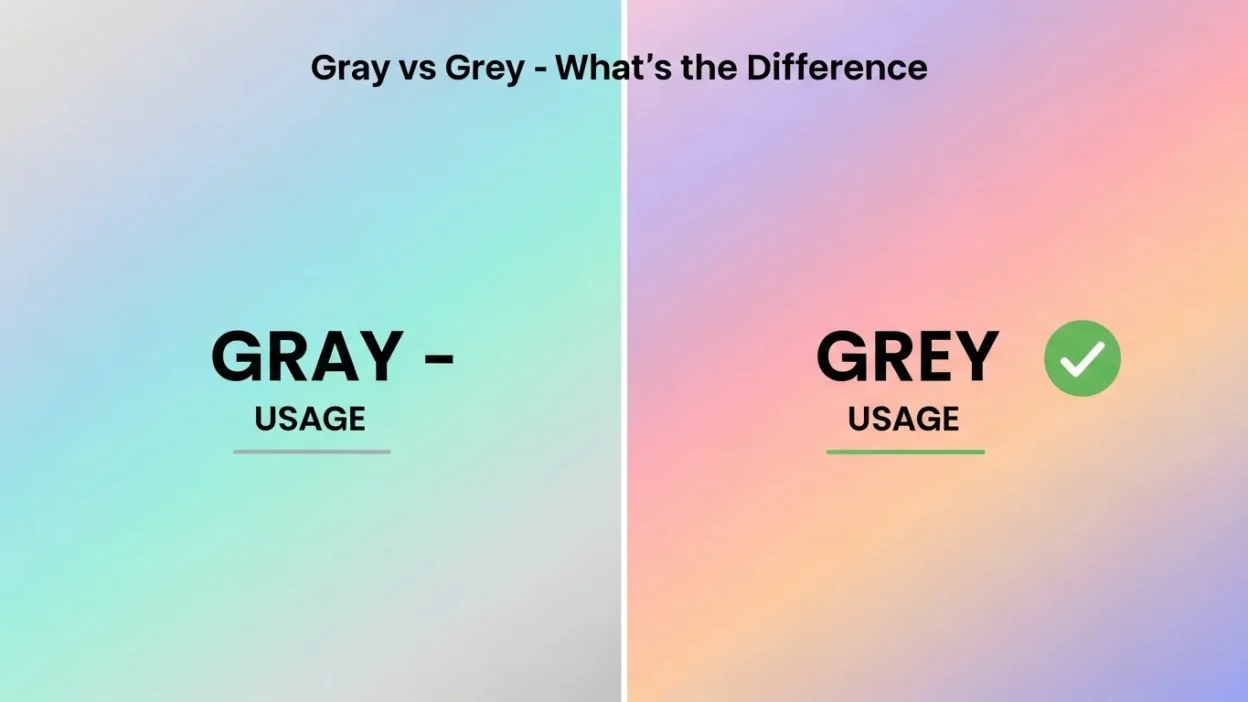
- Gray is the American English spelling.
- Grey is the British English spelling.
Both words:
- Have the same meaning
- Sound exactly the same
- Describe the same color
So, if you are wondering is it gray or grey, the answer is: both are correct. You only need to choose based on the type of English you are using.
Simple Background: Where Did These Spellings Come From?
In the past, English spelling rules were not fixed. People spelled words in different ways. Over time, English developed into two main writing systems:
- American English
- British English
Each system created its own spelling rules. In American English, the spelling gray became common. In British English, grey remained the preferred spelling.
That is why today we see the difference between gray and grey. It is not a difference in meaning but a difference in regional spelling style.
Many other words follow the same pattern, such as:
- color / colour
- center / centre
- favorite / favourite
So, gray vs grey is simply another example of this spelling difference.
Clear Explanation of the Difference
Let us explain the gray and grey difference in the simplest way.
There is no difference in meaning.
Both words describe:
A color between black and white.
The only difference is where the spelling is used.
Gray
- Used in American English
- Common in the United States
- Seen in American books, newspapers, schools, and websites
Grey
- Used in British English
- Common in the United Kingdom, Canada, Australia, and many other countries
- Seen in British books, academic writing, and news reports
This is why people compare gray vs grey in American English and gray vs grey in British English.
Comparison Table: Gray vs Grey
| Feature | Gray | Grey |
| Meaning | Same color | Same color |
| Pronunciation | Same | Same |
| Used in | American English | British English |
| Common in | USA | UK, Canada, Australia |
| Correct spelling | Yes | Yes |
This table shows clearly that the difference between gray and grey is only in spelling style.
Which One Should You Use and When?
Many learners ask: Which is correct gray or grey?
Both are correct. The right choice depends on your writing style.
Use gray when:
- Writing in American English
- Studying American English
- Writing for American readers
- Following US school or exam standards
Use grey when:
- Writing in British English
- Studying British English
- Writing for UK or international readers
- Following British or international exam standards
If you are still unsure and thinking should I use gray or grey, choose one style and use it consistently.
Gray vs Grey in Formal and Professional Writing
In formal writing, professional communication, and academic work, consistency is very important.
If you are writing:
- Business emails
- Academic essays
- News articles
- Research papers
- Office documents
you should stick to one spelling style only.
Formal Writing Examples
American English:
The report highlights the gray areas in company policy.
British English:
The report highlights the grey areas in company policy.
Both are correct, but do not mix them in the same document.
Gray vs Grey in Academic and Exam Writing
Students preparing for school exams, IELTS, TOEFL, or other academic tests often worry about gray vs grey spelling.
Here is a simple rule:
- If your exam follows American English, use gray.
- If your exam follows British English, use grey.
In academic writing, consistency shows good language control and professionalism.
Gray vs Grey in International English
English is a global language. Different countries follow different spelling systems.
Here is a simple guide:
- United States → gray
- United Kingdom → grey
- Canada → grey
- Australia → grey
- New Zealand → grey
- International academic English → grey (mostly British style)
This helps learners understand gray vs grey international usage.
Common Mistakes People Make
Many learners make small mistakes when using gray vs grey.
Thinking One Spelling Is Wrong
Some people believe only one spelling is correct. This is not true. Both are correct.
Mixing Both Spellings
Example:
The gray wall and the grey door look nice.
This is confusing. Use one spelling style only.
Believing Meaning Changes
Some think gray and grey describe different shades. This is false. Both describe the same color.
Changing Spellings in the Same Text
Switching between spellings makes writing look unprofessional. Always stay consistent.
Everyday Real Life Examples
Let us see gray vs grey examples from real life.
Emails
American English:
The office walls are painted gray.
British English:
The office walls are painted grey.
News Headlines
American:
Gray Clouds Cover the City
British:
Grey Clouds Cover the City
Social Media
- I bought a gray hoodie today.
- This grey jacket looks perfect for winter.
Both are correct.
Business Writing
American:
The contract has a few gray areas that need discussion.
British:
The contract has a few grey areas that need discussion.
Academic Writing
American:
The graph shows gray shading for low values.
British:
The graph shows grey shading for low values.
Simple Learning Section for Students and Beginners
This section is specially designed for gray vs grey for students and beginners.
Easy Memory Trick
- A in grAy → America
- E in grEy → England
This simple trick helps many learners remember the correct spelling.
Practice Sentences
Fill in the blanks:
- The sky is very ______ today.
- She wore a ______ sweater.
- His hair is turning ______ with age.
You can write gray or grey, depending on your English style.
Gray vs Grey for Learners
For ESL learners, the gray vs grey meaning is very simple:
Both words describe the same color. The only difference is spelling style.
If you learn:
- American English → use gray
- British English → use grey
That is all you need to remember.
Frequently Asked Questions
What is the difference between gray and grey?
There is no difference in meaning. The difference is only in spelling style.
Is it gray or grey?
Both are correct. Use the spelling that matches your English system.
Which is correct gray or grey?
Both are correct. Gray is American spelling, and grey is British spelling.
When should I use gray or grey?
Use gray in American English and grey in British English.
Can I mix gray and grey in one article?
No. Always use only one spelling style in the same text.
Is gray vs grey only a spelling difference?
Yes. The meaning, pronunciation, and usage remain the same.
Should students worry about this?
No. Just follow the English system you are learning.
Final Simple Explanation
The gray vs grey simple explanation is:
Gray and grey are the same word with different spellings based on American and British English.
Nothing more, nothing less.
Conclusion: Clear and Simple Ending
The confusion about gray vs grey is very common, but now it should be fully clear.
- Gray is used in American English
- Grey is used in British English
- Both mean the same color
- Both are 100% correct
There is no need to worry. Just choose the spelling that fits your English style and use it consistently.
Now, whenever you see gray or grey, you will understand it easily and confidently.