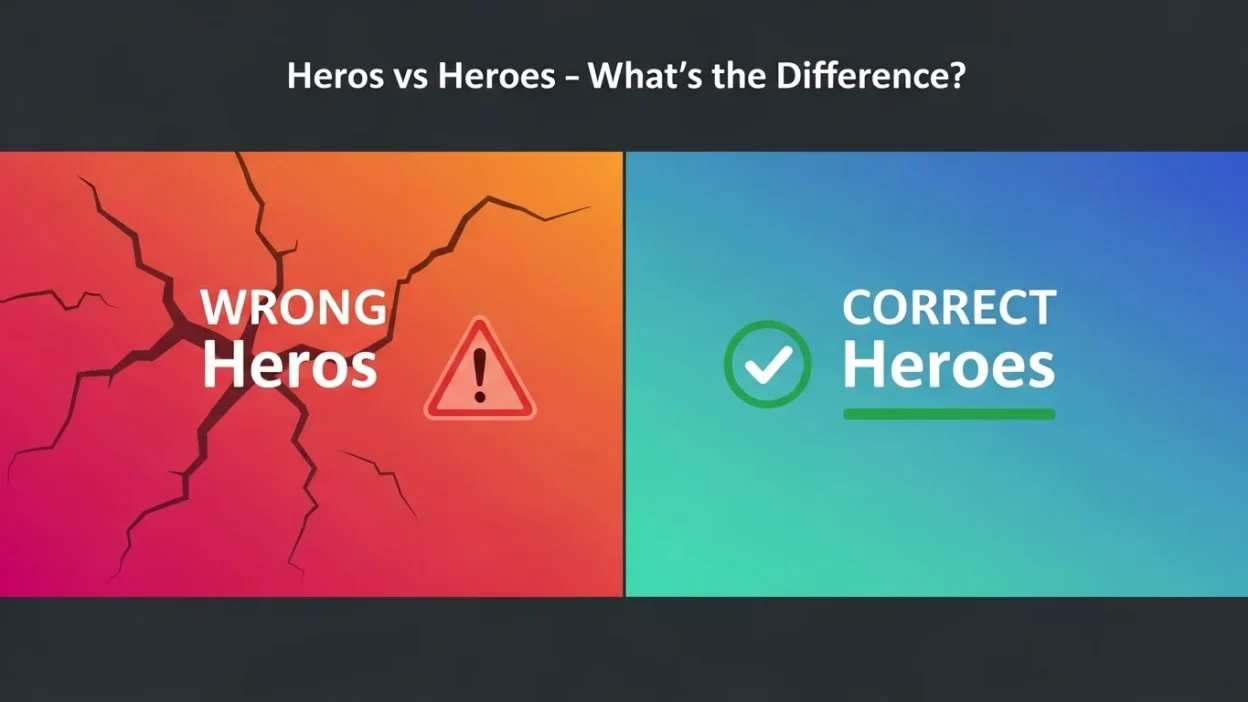
Many learners get confused about heros vs heroes. You might see both spellings in books, emails, or online, and wonder which one is correct.
This guide explains it in very simple English, so you’ll understand the difference on your first read.
By the end, you will know the correct plural of hero, common mistakes to avoid, and how to use heroes in everyday writing.
Quick Answer: Heros vs Heroes
Here’s the simplest answer for hero vs heroes:
- Hero ✅ – Use when talking about one person.
- Heroes ✅ – Use when talking about more than one hero.
- Heros ❌ – Incorrect spelling. Avoid it.
Tip: Think hero → heroes, like potato → potatoes.
Origin of Hero and Heroes Spelling
The word hero comes from ancient Greek, where it meant a person admired for courage. Over time, it entered English with the same meaning.
The plural is heroes, not heros. English nouns ending in -o usually add -es for plural:
- Potato → potatoes
- Tomato → tomatoes
- Hero → heroes
This is the main reason why people make mistakes when writing heros vs heroes.
Understanding the Difference
The difference is simple:
| Word | Meaning | Correct Usage? |
| Hero | One brave or admired person | ✅ Singular |
| Heroes | Two or more brave people | ✅ Plural |
| Heros | Wrong spelling | ❌ Never use |
Always remember: if you are talking about more than one hero, it’s heroes, never heros.
Comparison Table: Hero vs Heroes vs Heros
| Feature | Hero | Heroes | Heros |
| Singular/Plural | Singular | Plural | ❌ Incorrect |
| Example Sentence | “She is a hero.” | “The firefighters are heroes.” | “The firefighters are heros.” ❌ |
| Spelling | h-e-r-o | h-e-r-o-e-s | h-e-r-o-s ❌ |
| Meaning | One brave person | Two or more brave people | None |
Which One to Use and When
- Use hero for one person.
Example: “My sister is a hero for helping the injured bird.” - Use heroes for more than one.
Example: “The volunteers are heroes during the flood.” - Never use heros. It is always wrong in standard English.
Quick Rule: If it’s plural, add -es → heroes.
Common Mistakes People Make
Many students confuse heros vs heroes because:
- They think heroes looks unusual.
- They forget the plural of hero rule.
- They type too fast and skip the “e”.
Pro Tip: Whenever you’re unsure, check the base word. Singular hero becomes plural heroes, not heros.
Everyday Real Life Examples
Here’s how heroes spelling appears in daily life:
- Emails: “Thank you to all our heroes who helped with the school event.”
- News Headlines: “Local heroes save family from fire.”
- Social Media: “Shoutout to the healthcare heroes this year!”
- Classroom / Homework: “Write a story about your favorite hero.”
- Storybooks: “The heroes fought dragons and saved the village.”
- Conversation: “You are my hero!” or “All the volunteers are heroes.”
Notice: heros never appears in proper writing.
Learning Section for Students and Beginners
To remember the plural of hero:
- Start with the base word: hero.
- Add -es for plural → heroes.
- Compare with similar words:
- Potato → potatoes
- Tomato → tomatoes
- Hero → heroes
- Potato → potatoes
Extra Tip: Many English nouns ending in o use -es for plural.
Visual Cue for Students: Think of a hero with friends. One hero = hero, many friends = heroes.
FAQ Section: Hero vs Heroes
Q1: Is “heros” ever correct?
A: No, it is always incorrect. Use heroes.
Q2: How do I spell the plural of hero?
A: Spell it heroes, not heros.
Q3: Can I say “hero’s” instead of heroes?
A: No. Hero’s shows possession, like “the hero’s cape.”
Q4: Why do we add “-es” for heroes?
A: Words ending with o usually take -es in plural.
Q5: Can heroes refer to fictional characters?
A: Yes. Superheroes or storybook heroes are also “heroes.”
Q6: What about “superheros”?
A: Correct plural is superheroes, not superheros.
Q7: Can animals be called heroes?
A: Yes, metaphorically. Example: “The rescue dogs are heroes.”
Q8: How do I remember heros vs heroes?
A: Think: one hero → heroes, never skip the “e.”
Conclusion
The difference between heros vs heroes is simple:
- Heroes = correct plural of hero.
- Heros = incorrect, avoid it.
Remember the rule: hero → heroes, like potato → potatoes. Use heroes in emails, news, social media, classrooms, and stories.
By mastering this small rule, you will write clearly and confidently, and your readers will never be confused.

Michael is a passionate thinker and visionary creator who turns ideas into action. With focus and integrity, he strives to make every project purposeful and inspiring.