Many students and English learners feel confused when they see the words humour and humor.
The spellings look almost identical, but one word has an extra letter “u.” Because of this small difference, many people search online for humour vs humor to understand which spelling is correct.
You may wonder:
- What is the difference between humour and humor?
- Is humour or humor correct?
- Why do British writers spell humour with a “u”?
- Do humour and humor have different meanings?
The good news is that the answer is very simple. Once you understand the spelling difference, the confusion disappears completely.
This guide explains humour vs humor in very clear and simple English so that students, ESL learners, and beginners can understand it easily.
Quick Answer: Humour vs Humor
Here is the simple explanation:
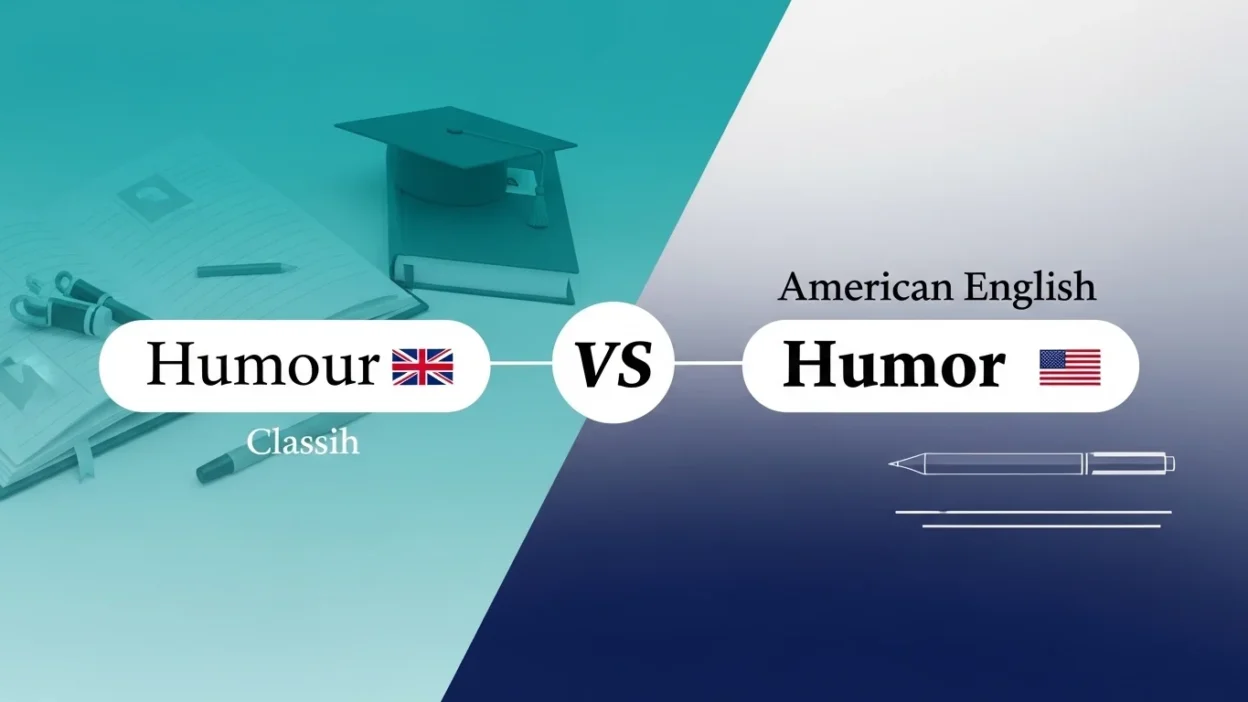
- Humour is the British English spelling.
- Humor is the American English spelling.
- Both words have exactly the same meaning.
- The only difference is spelling style, not meaning.
Examples:
- British English: She has a great sense of humour.
- American English: She has a great sense of humor.
So if you are wondering humour or humor which is correct, the answer is: both are correct, depending on the type of English you are using.
Definition of Humour and Humor
Before comparing the spellings, it helps to understand the meaning.
Humor (or humour) means:
- the ability to see or say something funny
- jokes or comedy
- anything that makes people laugh
Examples:
- His sense of humor makes everyone happy.
- British comedy often uses dry humour.
So the meaning of humour and humor is exactly the same.
Origin and Background of the Word
The word humor originally came from Latin. In ancient medicine, people believed the body contained four liquids called humors. These liquids were thought to affect a person’s mood and personality.
Later, the meaning changed. Instead of body liquids, the word began to describe:
- mood
- personality
- the ability to laugh
- funny situations
As English developed, two main spelling styles appeared:
- British English
- American English
This difference created the modern humour vs humor spelling variation.
Humour vs Humor: Key Difference Explained
The most important thing to remember is this:
There is no meaning difference between humour and humor.
The only difference is spelling style.
Humour
- British English spelling
- Common in the United Kingdom, Australia, and New Zealand
- Includes the letters “ou”
Example:
British writers often use subtle humour in their stories.
Humor
- American English spelling
- Common in the United States
- Drops the letter “u”
Example:
His humor makes the story more enjoyable.
Both spellings describe something funny or the ability to laugh.
Comparison Table: Humour vs Humor
| Feature | Humour | Humor |
| Meaning | Something funny or ability to laugh | Same meaning |
| English style | British English | American English |
| Spelling pattern | Contains “ou” | Drops the “u” |
| Common regions | UK, Australia, New Zealand | United States |
| Correct spelling | Yes | Yes |
This table makes the difference between humour and humor easy to understand.
How to Pronounce Humour and Humor
Another common question is about pronunciation.
Good news: Humour and humor are pronounced the same way.
Pronunciation:
HYOO-mer
Examples:
- She has a great sense of humor.
- His dry humour makes people laugh.
Even though the spelling changes, the sound does not change.
Which One Should You Use?
When deciding when to use humour or humor, think about the writing style you are following.
Use “Humour” (British English)
Use humour if you are writing for:
- the United Kingdom
- British schools or universities
- Australian or New Zealand readers
Example:
The article uses clever British humour.
Use “Humor” (American English)
Use humor if you are writing for:
- the United States
- American schools
- American readers
Example:
His humor makes the conversation more interesting.
Important tip:
Choose one spelling and stay consistent in your writing.
Similar British and American Spelling Differences
The difference between humour vs humor is part of a larger spelling pattern.
British English often keeps “ou”, while American English removes it.
Examples:
| British | American |
| colour | color |
| honour | honor |
| favour | favor |
| labour | labor |
| humour | humor |
This pattern helps students remember American vs British spelling differences.
Common Mistakes People Make
When learning humour vs humor, people sometimes make small mistakes.
Mixing Both Spellings
Example:
❌ Her humour and sense of humor make people laugh.
Correct versions:
✔ Her humour makes people laugh.
✔ Her humor makes people laugh.
Thinking the Meaning Is Different
Some learners believe:
- humour = jokes
- humor = mood
In modern English, both words mean the same thing.
Using the Wrong Style for the Audience
For example:
- Using humour in American academic writing
- Using humor in British academic writing
While not a serious mistake, it may look unusual.
Everyday Examples of Humour and Humor
Seeing real examples helps learners understand humour vs humor usage.
In Emails
British style:
I always enjoy your sense of humour during meetings.
American style:
I always enjoy your sense of humor during meetings.
In News Writing
British example:
The article uses clever humour to discuss politics.
American example:
The writer uses dark humor to describe the situation.
On Social Media
Examples people post online:
- I love British humour.
- This meme has great humor.
In Daily Conversation
People often talk about humor like this:
- She has a great sense of humor.
- His dry humour makes everyone laugh.
- Good humor can make stressful days easier.
Learning Tip for Students and Beginners
Here is an easy way to remember humour vs humor.
Simple Memory Trick
Think about the country:
- United Kingdom → Humour
- United States → Humor
Another helpful pattern:
British spelling keeps “ou.”
American spelling usually removes the “u.”
Once you remember this rule, many spelling differences become easier.
FAQ About Humour vs Humor
What is the difference between humour and humor?
The difference between humour and humor is only the spelling style. The meaning is exactly the same.
Is humour the British spelling of humor?
Yes. Humour is the British English spelling, while humor is the American English spelling.
Do humour and humor have the same meaning?
Yes. Both words refer to something funny or the ability to laugh.
Why does British English use humour with “u”?
British English keeps traditional spellings that include “ou.”
Is humor wrong in British English?
No, but humour is the preferred spelling in British English.
Is humour wrong in American English?
No, but humor is the standard spelling used in the United States.
Which spelling should students use?
Students should use the spelling required by their school, country, or teacher.
Which spelling is more common online?
Because American English is widely used on the internet, humor often appears more frequently.
Conclusion
The confusion between humour vs humor is very common, especially for students and English learners. Fortunately, the explanation is simple.
Both words:
- have the same meaning
- refer to something funny or the ability to laugh
- are correct spellings
The only difference is the type of English you use:
- Humour → British English
- Humor → American English
Once you understand this small spelling difference, choosing the right word becomes easy. Just follow the spelling style used in your country or audience and stay consistent in your writing.

Daniel Matthew is a passionate visionary who believes in creativity, purpose, and innovation. With a focus on growth and authenticity, he turns every idea into meaningful impact.