It is very common to get confused between “laid off” and “layed off”. Many students, learners and even native English speakers make mistakes with these words.
In this article, we will explain the difference in very simple English so you can understand it easily and never make this mistake again.
Why People Get Confused
English has many tricky words, especially with past tense verbs. People often see “laid off” in news, emails, or social media and sometimes write it as “layed off” because it looks like it could be correct.
The confusion happens because:
- English verbs can have irregular past forms (like go → went).
- “Lay” and “lie” sound similar but have different meanings.
- Many learners try to follow simple rules (add -ed for past tense), which doesn’t always work in English.
By the end of this article, you will always know which one is correct.
Quick Answer
Here is a fast and easy answer before we go into details:
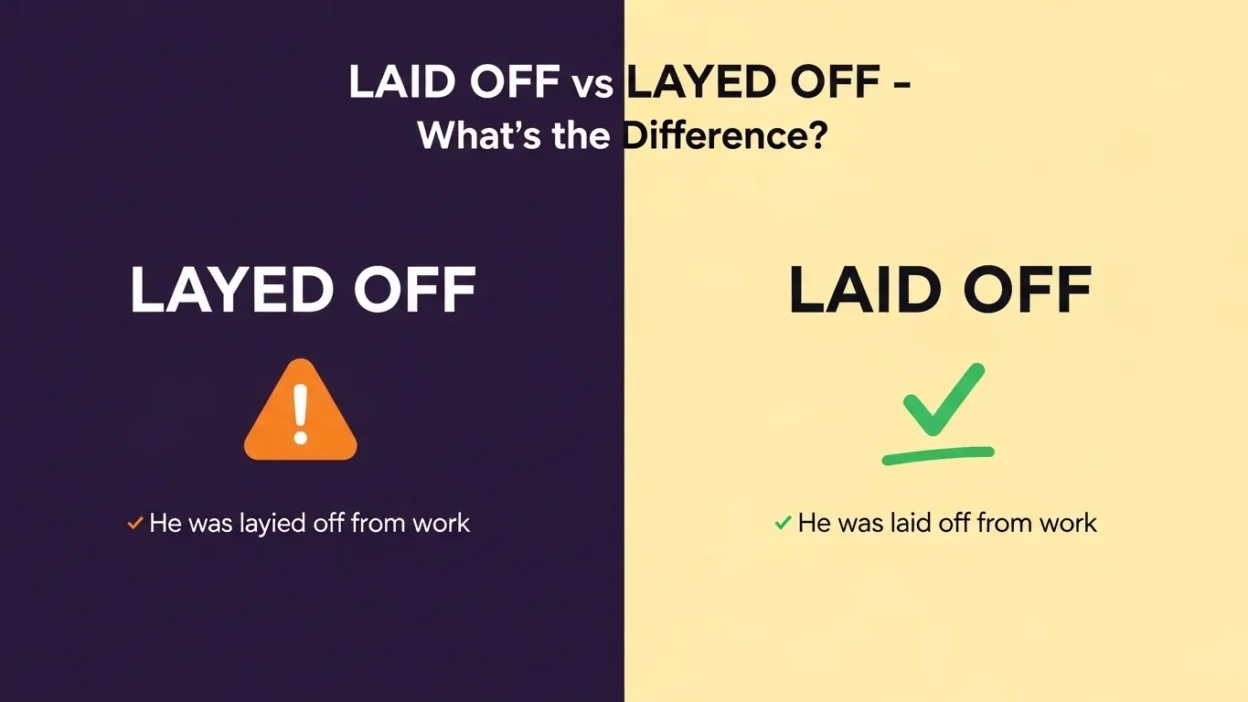
- ✅ Laid off → Correct past tense of lay off. It means someone lost their job because the company did not need them.
- ❌ Layed off → Incorrect. This is not a word in English.
Think of it like this: “laid off” is the only right choice when talking about losing a job.
Simple Origin or Background
The phrase “lay off” has been used in English for a long time. Originally:
- “Lay off” meant to stop doing something or to give someone a break.
- Over time, in business English, it came to mean temporarily or permanently ending someone’s employment because of reasons like:
- Company budget problems
- Fewer customers
- Business restructuring
The past tense of “lay” is “laid”, just like:
- I lay the book on the table → Yesterday, I laid the book on the table.
So, “laid off” simply uses the correct past tense.
Clear Explanation of the Difference
| Phrase | Correct? | Meaning | Example |
| Laid off | ✅ Yes | Lost a job due to company reasons | “I was laid off last week because the company needed to cut costs.” |
| Layed off | ❌ No | Not a word | “I was layed off” ❌ Wrong |
Important: There is no situation where “layed off” is correct. Always use “laid off”.
Which One to Use and When
Use “laid off” whenever you talk about:
- Jobs or employment
- Temporary or permanent dismissal
- Workplace announcements
Examples:
- “Several employees were laid off after the factory closed.”
- “He was laid off last month, but he found a new job quickly.”
You never use “layed off” in formal writing, emails, or social media.
Common Mistakes People Make
Here are some mistakes to watch out for:
- Writing layed off instead of laid off
- Using laid off when you actually mean fired (fired is personal, laid off is usually not your fault)
- Confusing lay off with lie down or put something down
Everyday Real Life Examples
Here are practical examples you may see in daily life:
Emails:
- “Dear team, due to budget cuts, some staff members will be laid off starting next month.”
News Headlines:
- “Tech Company Laid Off 200 Workers This Week.”
Social Media:
- “Feeling sad today. Just got laid off, but hoping for a better opportunity soon.”
Daily Conversation:
- “My friend was laid off last year, and now he works at a new company.”
Short Learning Section for Students and Beginners
Here are a few tips to remember:
- “Laid” is the past tense of “lay” → Always use laid off.
- Never write layed → Wrong spelling.
- Laid off is not the same as fired → Fired is personal, laid off is business reason.
- Practice sentences:
- “She was laid off yesterday.” ✅
- “He was layed off yesterday.” ❌
Tip: You can think of “laid off” as “someone laid your job aside temporarily or permanently.”
FAQ (Simple Questions & Answers)
1. Is “layed off” correct?
No. The correct form is laid off.
2. Can “laid off” mean fired?
Not exactly. Being laid off is usually not your fault; being fired usually is.
3. How do I spell the past tense of lay off?
It is always laid off.
4. Can I use “lay off” in the present tense?
Yes. Example: “The company might lay off some employees next month.”
5. Can I say “He was laid off because he did something wrong”?
Technically yes, but usually being laid off is for company reasons, not personal mistakes.
6. Is “lay off” only for jobs?
Mostly, yes. But in casual speech, it can mean stop bothering someone. Example: “Lay off! I’m busy.”
7. Can students use “laid off”?
Yes, if talking about jobs, internships, or part-time work.
8. How to remember the difference easily?
Think: “Laid is correct past tense → Laid off.”
Conclusion
In English, small mistakes can create big confusion. “Laid off” and “layed off” are one of those tricky cases.
- Always use “laid off”.
- Never use “layed off”.
- Remember it is past tense of lay off and mainly used when talking about jobs.
With practice, you will never make this mistake again. Just think: laid = past tense → laid off = correct.

Michael is a passionate thinker and visionary creator who turns ideas into action. With focus and integrity, he strives to make every project purposeful and inspiring.