Many English learners and even native speakers get confused between “make do” and “make due”. The two phrases sound similar, but only one is correct in most cases.
Understanding the difference is simple once you know the meaning and usage. This article will explain it step by step so that anyone can understand.
Why People Get Confused
The confusion happens because:
- The phrases sound almost the same when spoken.
- English spelling and pronunciation can be tricky.
- People sometimes guess based on logic (“due” seems correct because it looks formal).
Knowing the exact meaning of each phrase helps avoid mistakes.
Quick Answer
Here’s a short guide:
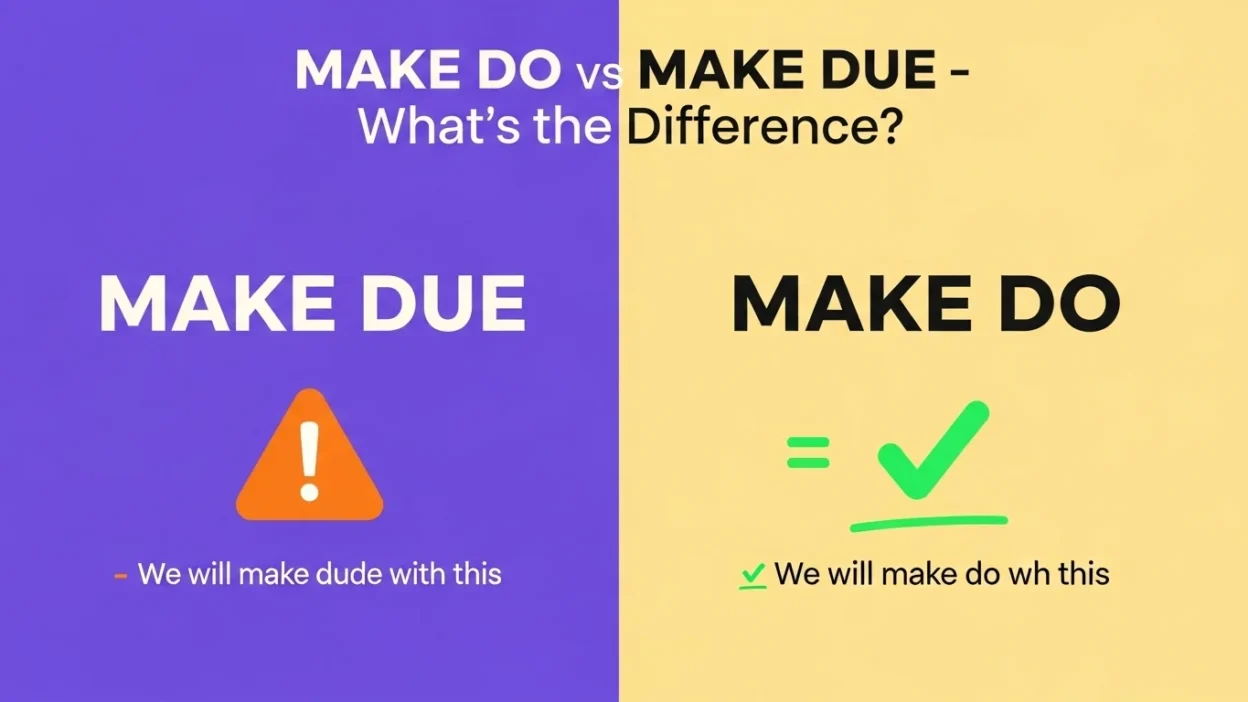
- Make do > – Correct phrase
Meaning: To manage with what you have, even if it is not perfect.
Example: We don’t have a coffee machine, so we’ll have to make do with instant coffee. - Make due ❌ – Incorrect phrase
Meaning: This is a common mistake. “Make due” is not standard English. Do not use it.
Origin / Background
- Make do comes from old English.
- “Do” in this phrase means “manage” or “cope”.
- The phrase has been used for hundreds of years to describe making the best of a situation.
- Make due is a modern mishearing or misspelling. Some people think “due” makes sense (like “something is due”), but it is wrong in this context.
Clear Explanation of the Difference
| Phrase | Correct? | Meaning | Example |
| Make do | > Yes | Manage with what you have, even if it is not ideal | I forgot my umbrella, so I had to make do with a plastic bag. |
| Make due | ❌ No | Incorrect; often used by mistake | ❌ I had to make due with a small lunch. (Wrong) |
Tip: Always remember: “do” is the verb here, not “due.”
Which One to Use and When
Use make do when:
- You need to cope with something imperfect.
- You want to express that you are making the best of what is available.
Do not use make due. It is always considered a mistake.
Common Mistakes People Make
- Writing “make due” in emails or social media.
- Confusing “due” (which usually means expected or owed) with “do.”
- Assuming “make due” is more formal or correct.
Remember: “Make do” is the safe and correct choice every time.
Everyday Real Life Examples
Emails
- > We don’t have enough chairs for the meeting, so we’ll make do with the floor cushions.
- ❌ We’ll make due with the floor cushions. (wrong)
News / Social Media
- > People had to make do with limited water after the storm.
- ❌ People had to make due with limited water after the storm. (wrong)
Daily Life
- > I forgot my lunch, so I’ll make do with a small snack.
- > We don’t have a printer, so we’ll make do by writing by hand.
Short Learning Section for Students & Beginners
- Step 1: Hear the sound: “make do” – not “make due.”
- Step 2: Remember the meaning: manage or cope.
- Step 3: Practice with simple sentences:
- I will make do with my old phone.
- She had to make do without sugar in her recipe.
- Step 4: Avoid “make due” completely.
FAQ (Frequently Asked Questions)
- Can I say “make due” in English?
> No. It is a mistake. Always use make do. - Is “make do” formal or informal?
> It is neutral. You can use it in emails, stories, or conversations. - Does “make do” mean “survive”?
> Not exactly. It means manage with what you have, not just survive. - Can “make do” be used in the past tense?
> Yes: We made do with only two chairs yesterday. - Is “make do” only for bad situations?
> Usually yes, but it can also mean adjusting when things are not perfect. - Can I replace “make do” with “manage”?
> Yes, in most cases. We had to make do → We had to manage. - Why do people say “make due” if it is wrong?
Many people guess or mishear the phrase, thinking “due” looks correct. - Is “make do” used in spoken English?
> Yes, very commonly.
Conclusion
To summarize:
- Always use “make do.”
- Never use “make due.”
- “Make do” means to manage with what you have, even if it’s not perfect.
- The phrase is easy to remember: think of “do your best” with what you have.
By practicing this simple rule, you will never confuse these phrases again.
Next time you need to explain coping with a small problem, just remember: make do is the correct way to say it.

Andrew Christopher is a passionate visionary who blends creativity with purpose to bring ideas to life. With a focus on innovation and integrity, he inspires growth and lasting impact.