Quick Answer
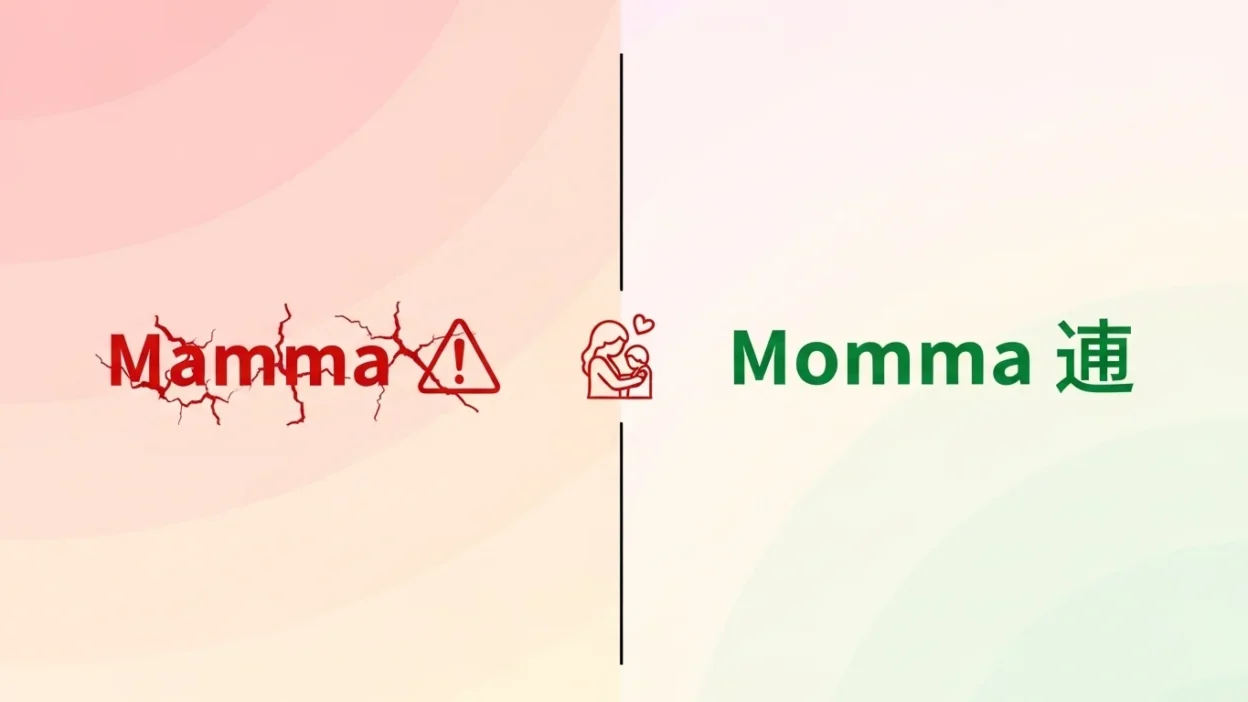
Is it mamma or momma?
- Momma ✅ – the modern, widely used spelling in everyday English, texts, and social media.
- Mamma ✨ – correct but mostly used in literary, historical, or poetic contexts.
- Both words mean mother and are affectionate.
Tip: Use momma in casual writing or texting, and mamma in stories, poems, or formal writing.
Many students, learners and beginners get confused between mamma vs momma because they sound the same and mean “mother.”
You might also wonder:
- “Mamma or momma which is more common?”
- “Is mamma correct in modern English?”
- “What’s the difference between momma, mamma, and mama?”
This article explains the difference between mamma and momma, their meaning, correct spelling, and how to use them in everyday English, literature, or texting.
By the end, you’ll know exactly which spelling to use in any situation.
Momma Meaning
Momma is an affectionate, informal term for “mother,” widely used today.
Examples of momma in sentences:
- Good morning, Momma! 🌸
- I love you, Momma.
- The baby ran to Momma.
Mamma Meaning
Mamma also means “mother” but is less common today. It is often used in:
- Literary or historical texts
- Stories, poems, or formal writing
- Nostalgic or poetic expressions
Examples of mamma in sentences:
- “The child called out for Mamma.”
- In old stories, Mamma always cared for everyone.
Origin of Mamma and Momma
Both words come from child-directed speech – the simple sounds babies make when learning to talk.
- Mamma → traditional spelling influenced by Latin and older English texts.
- Momma → modern spelling, widely used in American English today.
Momma vs Mamma Comparison Table
| Feature | Momma | Mamma |
| Common spelling | ✅ Modern English | ✨ Literary or older texts |
| Meaning | Mother (informal) | Mother (informal, literary) |
| Informal writing | ✅ Yes | Less common |
| Found in dictionaries | ✅ Yes | ✅ Yes |
| Example sentence | I love you, Momma | “The child ran to Mamma” |
Momma vs Mamma vs Mama: Usage Tips
- Momma → modern, casual, everyday use
- Mamma → literary, poetic, formal, or nostalgic writing
- Mama → very informal, sometimes regional or baby-talk
Example sentences:
- Momma: I can’t wait to see you, Momma!
- Mamma: “Little Jane called for Mamma,” the story read.
- Mama: The baby cried for Mama.
When to Use Momma or Mamma
Use Momma When:
- Writing casual English
- Sending texts, emails, or social media messages
- Talking to children or family
Example:
- Good morning, Momma! 🌸
Use Mamma When:
- Writing literary or historical texts
- Quoting older stories or poems
- Trying to give a nostalgic or formal tone
Example:
- “The child ran to Mamma,” the story read.
Common Mistakes
- Thinking one spelling is wrong: Both are correct, but momma is more common today.
- Using mamma in casual texts: Use momma instead.
- Confusing momma, mamma, and mama:
- Momma = everyday modern English
- Mamma = literary or poetic
- Mama = informal, baby-talk
- Momma = everyday modern English
Everyday Examples
Text Messages
- Can’t wait to visit you, Momma.
- Good night, Momma! ❤️
Social Media
- Happy Mother’s Day, Momma! 🎉
- The storybook read: “The child ran to Mamma.”
With Children
- The baby cried for Momma.
- “Where is Mamma?” asked the little girl.
Learning Tips for Students and Beginners
Easy trick to remember:
- Momma = modern, casual → everyday use
- Mamma = literary, older style → formal writing or stories
- Mama = informal, baby-talk → casual and regional
Mnemonic: “Momma is modern, Mamma is memories, Mama is mini-speech.”
Extra tip: In texts, emails, and social media, always use Momma.
Frequently Asked Questions (FAQ)
1. Is momma or mamma correct?
Both are correct. Momma is more common today; Mamma is literary or older style.
2. Can I use mamma in modern writing?
Yes, but it gives a formal, poetic, or nostalgic tone.
3. What does momma mean?
An affectionate term for “mother.”
4. Are momma and mama the same?
Yes, but mama is informal and sometimes regional.
5. Which spelling is better for texting or emails?
Momma is preferred in casual messages.
6. Is mamma used in poetry or literature?
Yes, older literature and poetry often use Mamma.
7. Example sentence with momma?
- I love you, Momma!
8. Example sentence with mamma?
- “The child called for Mamma,” the story read.
9. How to remember momma vs mamma spelling?
Think: Momma = modern, Mamma = memories/literary, Mama = informal/baby-talk.
Conclusion
The confusion between mamma or momma happens because they look and sound the same.
Key points:
- Momma ✅ → modern, casual, everyday use
- Mamma ✨ → older, literary, or formal style
- Mama → informal or regional
By following these rules, you can confidently choose momma, mamma, or mama in writing, texting, reading, and storytelling.