Many people feel confused about Miss or Ms. These two titles are used before a woman’s name, but they are not the same.
You will learn the difference between Miss and Ms, Miss meaning, Ms meaning, how to use Miss and Ms, and even the difference with Mrs.
By the end, you’ll confidently choose the right title in emails, school, work, or daily life.
Why People Get Confused
Both Miss and Ms are used for women, and they look similar.
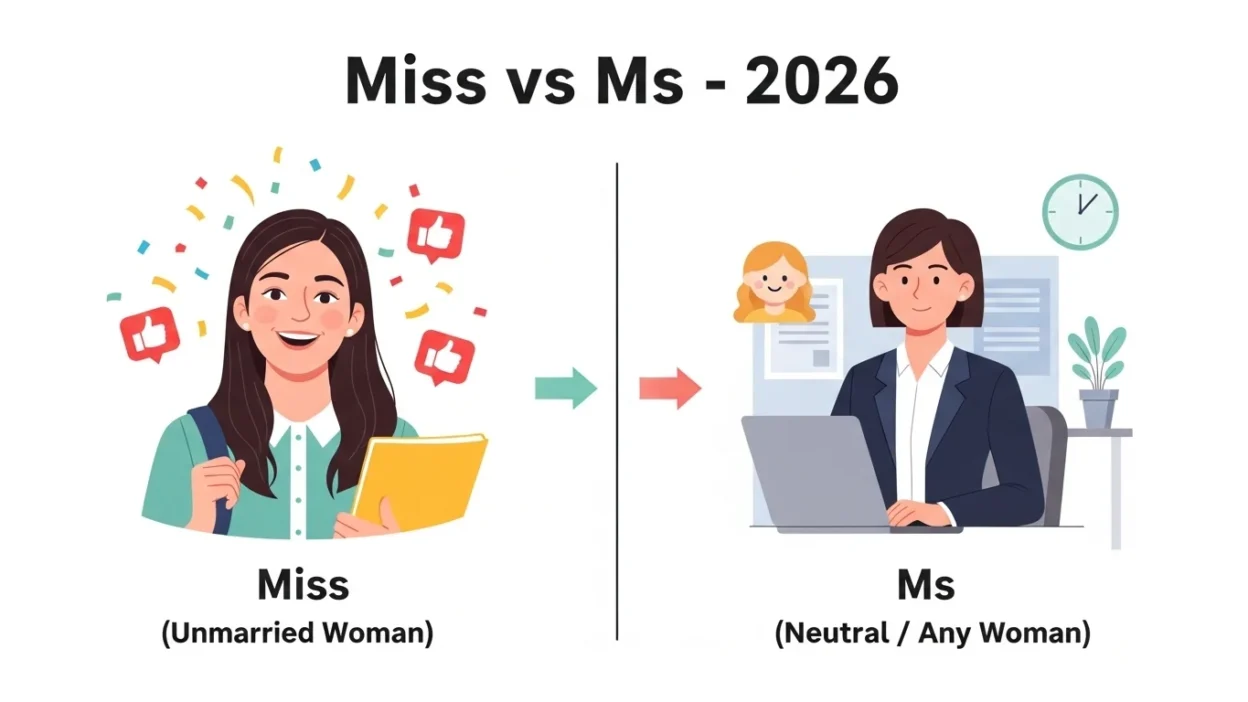
- Miss → for unmarried women
- Ms → neutral; used when marital status is unknown or unimportant
Many learners are unsure which one to use in emails, formal writing, or introductions. Adding Mrs into the mix sometimes makes it even more confusing.
Quick Answer: Simple Difference
- Miss → used for unmarried women
- Example: Miss Ali is my teacher.
- Example: Miss Ali is my teacher.
- Ms → used for any woman (married or unmarried)
- Example: Ms Khan will attend the meeting.
- Example: Ms Khan will attend the meeting.
Easy Trick to Remember:
- Miss = not married
- Ms = safe choice for all women
Modern Usage Tip
- Miss is mostly used for young women, school teachers, or girls.
- Ms is widely used today in professional emails, business, and formal situations.
- If you’re unsure of a woman’s marital status, always use Ms — it is polite and safe.
Clear Explanation of the Difference
| Title | Meaning | When to Use | Example |
| Miss | Unmarried woman | When you know she is not married | Miss Sara is my teacher |
| Ms | Any woman (neutral title) | When marital status is unknown | Ms Ahmed is our manager |
| Mrs | Married woman | When you know she is married | Mrs Khan will join the event |
✔ Miss = unmarried
✔ Ms = neutral / safe choice
✔ Mrs = married woman
When to Use Miss, Ms, or Mrs
Use Miss When:
- You know the woman is unmarried
- In schools or for young girls
Examples:
- Miss Fatima is our English teacher.
- Miss Ayesha won the prize.
Use Ms When:
- You do not know marital status
- You are in professional or formal situations
- You want a neutral and respectful title
Examples:
- Ms Ali will attend the meeting.
- Dear Ms Khan, thank you for your email.
Use Mrs When:
- You know the woman is married
- Often used in formal introductions or invitations
Example:
- Mrs Ahmed hosted the ceremony.
When NOT to Use Miss or Ms
❌ Avoid using Miss:
- If you are unsure about marital status
- In professional emails (unless certain)
❌ Avoid using Ms:
- Rarely wrong, but if someone prefers another title like Mrs or Dr, respect it
Pro Tip: If unsure, always use Ms — it is polite, modern, and safe.
Common Mistakes People Make
- Using Miss for married women
- ❌ Miss Ahmed (if married)
- ✅ Ms Ahmed
- ❌ Miss Ahmed (if married)
- Avoiding Ms completely
- Ms is safe in almost all situations
- Ms is safe in almost all situations
- Guessing marital status
- Never assume; use Ms if unsure
- Never assume; use Ms if unsure
- Ignoring professional etiquette
- Miss is fine in school, but Ms is better in emails
- Miss is fine in school, but Ms is better in emails
Everyday Real Life Examples
In Emails / Work
- “Dear Ms Khan, thank you for your message.”
In School
- “Miss Ali is our class teacher.”
On Forms / Applications
- Title options: Miss / Ms / Mrs
Social Situations
- “I met Ms Sara at the event.”
Decision Making Scenario
Friends choosing a gift:
- “For Fatima?” → Yay! Use Miss if she’s young/unmarried
- “For Ms Ahmed?” → Safe choice if unsure
Mini Practice: Fill in the Blank
- ______ Ali is my school teacher. (Miss/Ms)
- Dear ______ Khan, thank you for your email.
- ______ Sara will join the meeting.
- The married lady is called ______ Ahmed.
✅ Answers: 1. Miss 2. Ms 3. Ms 4. Mrs
Extra Practice: Choose the Correct Option
- Professional email → ______
- A) Miss
- B) Ms ✅
- A) Miss
- Young school teacher → ______
- A) Miss ✅
- B) Ms
- A) Miss ✅
- Married woman in invitation → ______
- A) Mrs ✅
- B) Ms
- A) Mrs ✅
Learning Tips for Students and Beginners
✔ Quick Rule:
- Miss = unmarried woman
- Ms = neutral and safe
- Mrs = married woman
✔ Practice using Miss vs Ms vs Mrs for beginners examples:
- “Dear Ms Ahmed”
- “Miss Sara is my teacher”
- “Mrs Khan hosted the party”
✔ Avoid common mistakes Miss Ms by always checking context.
FAQ Section
1. What is Miss meaning?
It means an unmarried woman.
2. What is Ms meaning?
It is a neutral title for any woman.
3. What is the difference between Miss and Ms?
Miss shows marital status, Ms does not.
4. Is Ms more polite than Miss?
Yes, especially when marital status is unknown.
5. Can I use Ms for a married woman?
Yes, it is safe and modern.
6. When should I use Miss or Ms?
Miss for unmarried women; Ms when unsure or in professional situations.
7. What should beginners avoid?
Never guess marital status; use Ms if unsure.
8. How is Mrs different?
Mrs is used for married women and shows marital status.
Quick Summary (Easy to Remember)
✔ Miss = unmarried woman
✔ Ms = neutral and safe
✔ Mrs = married woman
✔ Use Ms when unsure
✔ Use Miss in schools or for young women
✔ Use Mrs for married women
Conclusion
Now you clearly understand Miss or Ms and even Mrs.
- Use Miss for unmarried women
- Use Ms when unsure or in professional situations
- Use Mrs for married women
By practicing how to use Miss and Ms, avoiding common mistakes Miss Ms, and using modern etiquette, you can confidently address women in emails, school, work, and daily life.

Daniel Matthew is a passionate visionary who believes in creativity, purpose, and innovation. With a focus on growth and authenticity, he turns every idea into meaningful impact.