Many people feel confused when they see “more then” and “more than.” These two phrases look almost the same, and the words then and than sound very similar when spoken. Because of this, students, English learners, and even native speakers often mix them up.
But the good news is this: the difference is very simple. Once you understand a few easy rules, you will never feel confused again. This article explains everything in very simple English, using clear examples, easy explanations, and real-life situations.
By the end, you will fully understand:
- What more than means
- Why more then is usually wrong
- How to choose the correct one every time
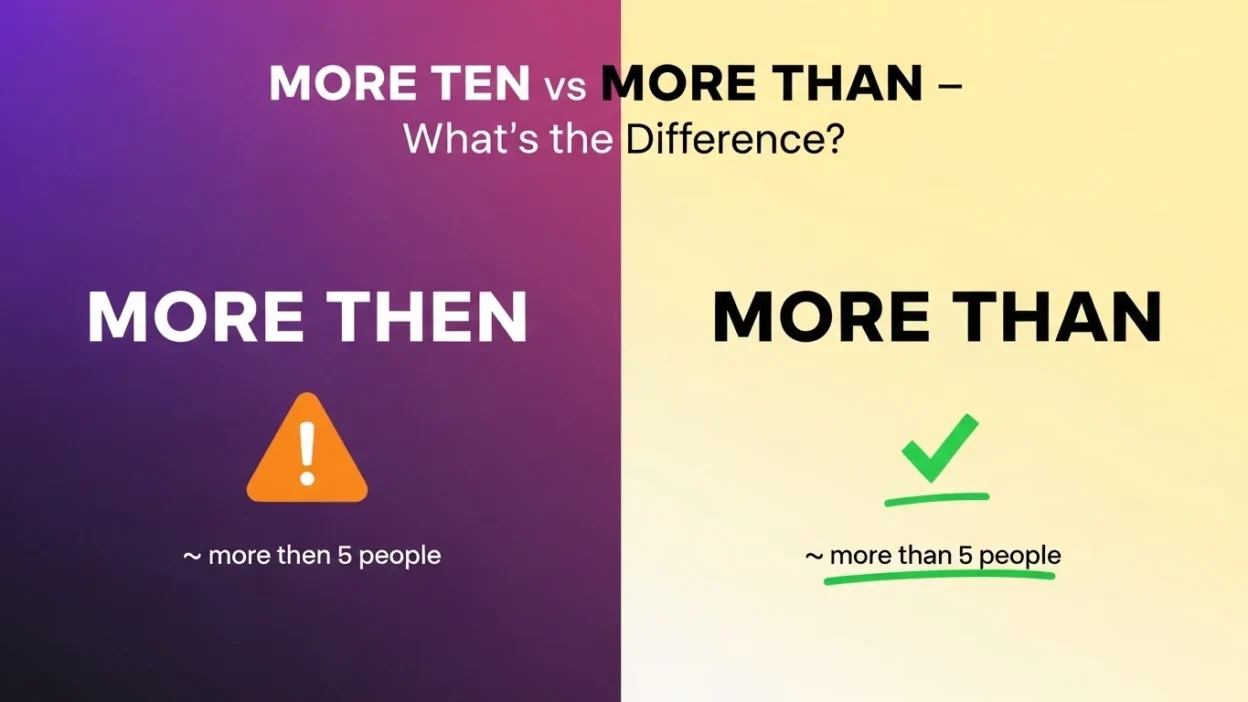
Quick Answer: The Simple Difference
- More than → used to compare numbers, amounts, or levels
- Example: I have more than five books.
- More then → almost always wrong
- Correct form: more than
Important note:
In correct English, “more then” is not a proper phrase.
The correct phrase is “more than.”
Simple Background: Where Do These Words Come From?
To understand the confusion, we need to know what then and than mean.
Than
- Used for comparison
- Helps show difference between two things
Example:
- She is taller than me.
- This bag is heavier than that one.
Then
- Used for time, order, or sequence
- Shows what happens next
Example:
- I ate dinner, then I went to bed.
- Finish your work, then you can play.
Because than and then sound similar, many people type the wrong one. But their meanings are very different.
Clear Explanation of the Difference
What Does “More Than” Mean?
More than means:
- A bigger number
- A larger amount
- A higher level
- A stronger degree
It is used when comparing two things.
Examples:
- I have more than 10 pens.
- This movie is more than 2 hours long.
- She has more than enough money.
What About “More Then”?
More then is not correct English.
Why?
- Then talks about time, not comparison.
- The word more needs than, not then, for comparison.
So:
- ❌ more then → wrong
- ✅ more than → correct
Comparison Table: More Then vs More Than
| Feature | More Then | More Than |
| Correct English | ❌ No | ✅ Yes |
| Used for comparison | ❌ No | ✅ Yes |
| Used for time order | ❌ No | ❌ No |
| Common mistake | ✅ Yes | ❌ No |
| Correct usage | Never | Always |
Which One Should You Use and When?
Always Use: MORE THAN
Use more than when:
- Talking about numbers
- Talking about amounts
- Talking about time
- Talking about distance
- Talking about feelings or degree
Examples:
- More than 5 people came.
- It took more than one hour.
- I love you more than anything.
- He earns more than his brother.
Never Use: MORE THEN
There is no situation where “more then” is correct.
Common Mistakes People Make
Here are some common wrong sentences and their corrections:
❌ I have more then two cats.
✅ I have more than two cats.
❌ She is more then happy.
✅ She is more than happy.
❌ It costs more then 100 rupees.
✅ It costs more than 100 rupees.
❌ He waited more then five minutes.
✅ He waited more than five minutes.
Everyday Real-Life Examples
In Emails
- I waited more than one week for your reply.
- This task will take more than two days.
In News
- More than 1,000 people attended the event.
- The storm caused more than $1 million in damage.
On Social Media
- I received more than 100 likes!
- This video has more than 1 million views.
In Daily Conversation
- I need more than one cup of tea.
- He eats more than anyone I know.
- This bag weighs more than 10 kilos.
Short Learning Section for Students and Beginners
Easy Rule to Remember
If you are comparing, always use:
👉 MORE THAN
Simple Memory Trick
- Than = comparison
- Then = time
So:
- bigger than
- later then
Practice Examples
Choose the correct one:
- I have more ___ five friends.
→ Answer: than - She slept more ___ eight hours.
→ Answer: than - He ate more ___ two burgers.
→ Answer: than
Frequently Asked Questions (FAQ)
1. Is “more then” ever correct?
No. “More then” is always wrong.
The correct form is “more than.”
2. Why do people confuse “then” and “than”?
Because they:
- Sound similar
- Look similar
- Are typed quickly without checking
3. What does “more than” mean in simple words?
It means a bigger amount or number.
Example:
- More than 5 = 6 or higher
4. Can I use “more than” for feelings?
Yes.
Examples:
- I love you more than anything.
- She is more than happy.
5. Is “then” only about time?
Mostly yes.
Examples:
- First eat, then sleep.
- Finish homework, then watch TV.
6. How can I stop making this mistake?
Remember this:
- Than = comparison
- Then = time
7. Is “more than enough” correct?
Yes. It means more than needed.
Example:
- We have more than enough food.
8. Is it okay to say “more than one”?
Yes. It means two or more.
Example:
- More than one person called today.
Conclusion: Simple Rule, Clear Choice
The confusion between more then and more than is very common, but the rule is simple:
👉 Always use “more than.”
👉 Never use “more then.”
If you remember that “than” is for comparison and “then” is for time, you will never make this mistake again.
With a little practice, this small grammar problem will completely disappear, and your English will become clearer, more confident, and more correct.
Keep learning, keep practicing, and enjoy improving your English every day! 😊

Daniel Matthew is a passionate visionary who believes in creativity, purpose, and innovation. With a focus on growth and authenticity, he turns every idea into meaningful impact.