Many English learners feel confused when they see the words “pail or pale.” They look almost the same, and they even sound similar when spoken. Because of this, people often mix them up in writing and speaking.
This confusion is very common in school English, daily conversation, and exams. But the truth is very simple. Once you clearly understand the meaning of each word, you will never make a mistake again.
In this guide, you will learn the difference between pail and pale in the easiest English possible with clear examples, simple rules, and real-life situations.
Quick Meaning
Before anything else, let’s make it super clear:
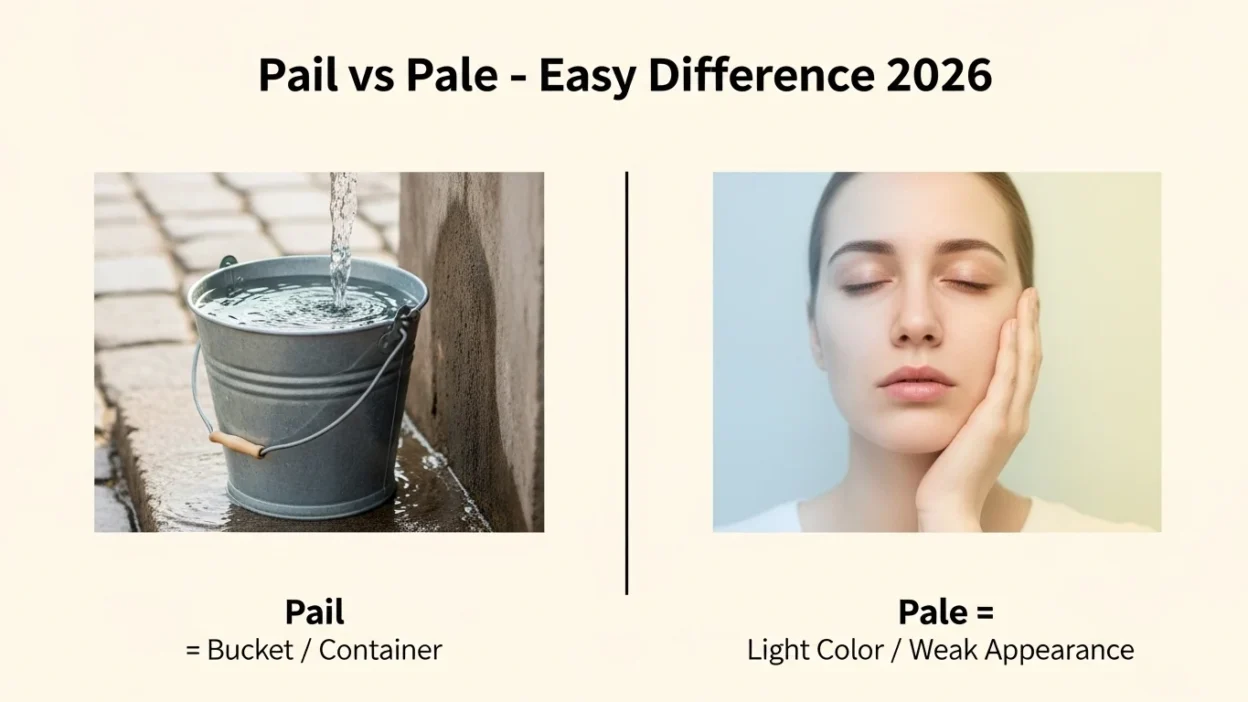
- Pail = a bucket or container used to carry water or other things
- Pale = light in color or looking weak, sick, or tired
Super simple memory rule:
- If you can hold it or fill it → it is a pail
- If you can describe it → it is pale
What Does Pail Mean?
A pail is a real object. It is something physical that you can touch and use.
A pail is usually:
- A bucket-like container
- Used for water, milk, sand, or cleaning
- Made of plastic or metal
- Has a handle for carrying
Simple meaning of pail:
A pail is just another word for a bucket.
Example sentences:
- She carried a pail of water from the well.
- The farmer used a pail to collect milk.
- He filled the pail for cleaning the floor.
So, when you think of pail, always think of a container you can hold.
What Does Pale Mean?
Pale is not a thing. It is a describing word. It tells us how something looks.
Pale is used for:
Light color
When something has a soft or weak color:
- Pale blue sky
- Pale yellow light
- Pale green leaves
Weak or sick appearance
When a person does not look healthy or strong:
- She looked pale after being sick
- He turned pale after hearing the news
- The child looked pale and tired
So, pale always describes appearance or color, not objects.
The Real Difference Between Pail and Pale
The main difference is very simple:
- Pail is a noun (a thing)
- Pale is an adjective (a description)
One you can touch, the other you can only describe.
Easy understanding:
- Pail = physical container (bucket)
- Pale = soft color or weak appearance
Easy Comparison Table
| Feature | Pail | Pale |
| Type | Thing (noun) | Description (adjective) |
| Meaning | Bucket or container | Light color or weak look |
| Can you touch it | Yes | No |
| Use | Carrying water or items | Describing color or health |
| Example | Pail of water | Pale face or pale color |
When to Use Pail
Use pail when talking about physical containers.
You will use it in situations like:
- Cleaning and washing
- Carrying water
- Farm or outdoor work
- Household chores
Real examples:
- Bring a pail of water for cleaning.
- The worker filled the pail with sand.
- She washed clothes using a pail.
When to Use Pale
Use pale when describing something.
You will use it in situations like:
- Describing skin color
- Talking about emotions or health
- Describing soft colors in nature or objects
Real examples:
- His face looked pale after running.
- The room was painted in pale colors.
- She wore a pale pink dress.
Easy Way to Remember Forever
Here is the simplest trick:
- Think Pail = Bucket with water
- Think Pale = Face or color
Another easy trick:
- Pail has A → think “A for water container”
- Pale has E → think “E for expression on face”
Common Mistakes Students Make
Many learners confuse these words because they look and sound similar.
Wrong use of pail:
- He carried a pale of water ❌
- The sky is pail blue ❌
Correct use:
- He carried a pail of water ✔
- The sky is pale blue ✔
Wrong use of pale:
- She filled a pale with milk ❌
Correct use:
- She filled a pail with milk ✔
The key mistake is always mixing object vs description.
Real Life Examples You Can Relate To
At home:
- I need a pail to wash the car.
- The baby looked pale after not sleeping well.
At school:
- Draw a pail in your notebook.
- Use pale colors in your painting.
In conversation:
- You look pale today, are you okay?
- Please bring a pail of water.
On social media:
- The sunset looks pale and soft today.
- Old photos show people carrying wooden pails.
Simple Learning Practice
Try this small exercise in your mind:
- If you can fill it with water → pail
- If you can describe it with color or feeling → pale
Now make your own sentences:
- I carried a pail of water.
- Her face looked pale after the exam.
Frequently Asked Questions
Are pail and pale the same pronunciation?
They sound very similar but are not exactly the same. One is a bit sharper, and the other is softer.
Is a pail the same as a bucket?
Yes, a pail is another word for a bucket in English.
What does pale mean in simple English?
It means light in color or looking weak or tired.
Why do people confuse pail and pale?
Because they look similar in spelling and sound almost the same when spoken.
Can pale be used for colors?
Yes, pale is often used for soft or light colors like pale blue or pale pink.
Is pail still used in modern English?
Yes, but many people also use the word bucket instead.
What is the easiest way to remember both words?
Pail is a thing you carry. Pale is a word that describes how something looks.
Conclusion
The confusion between pail or pale is very common, but the difference is actually very simple.
- Pail is a container like a bucket that you can touch and use.
- Pale is a describing word used for color or appearance.
If you remember just one idea, it will solve everything:
- One is a thing (pail)
- The other is a description (pale)
With a little practice, you will never confuse them again in writing or speaking.

Andrew Christopher is a passionate visionary who blends creativity with purpose to bring ideas to life. With a focus on innovation and integrity, he inspires growth and lasting impact.