Quick Answer: Passed Away vs Past Away
| Word | Meaning | Part of Speech | Example |
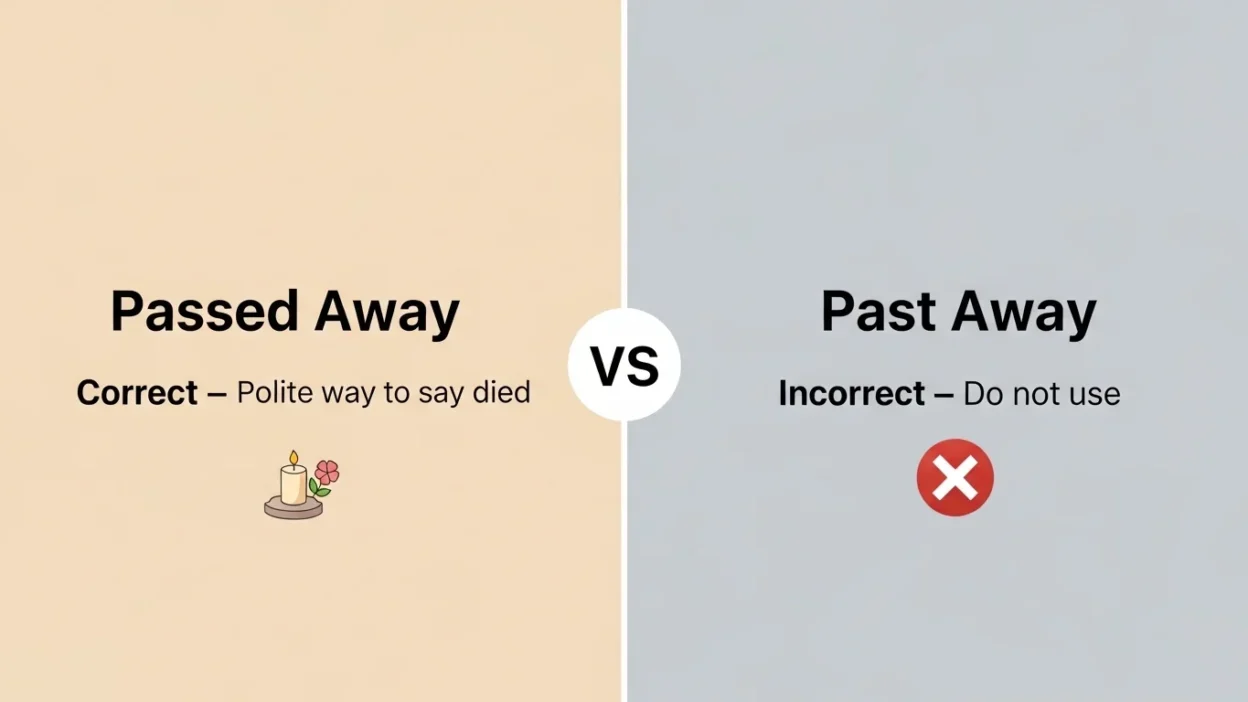
| Passed away | Polite way to say someone died | Verb phrase | His grandfather passed away last night. |
| Past away | ❌ Incorrect spelling | — | Incorrect: He past away yesterday. |
Tip:
- Passed away → correct expression
- Past away → incorrect spelling
- Pronunciation: passed away = past uh-way
This Quick Answer gives learners an instant definition and example for searches like passed away vs past away meaning.
Many students, learners and beginners get confused with passed away vs past away.
- Some write past away thinking it is correct.
- Others want a polite expression for death in emails, messages, or essays.
The simple fact:
Passed away is correct; past away is always wrong.
This guide explains the difference between passed away and past away, shows examples in sentences, highlights common mistakes, and gives easy tips for learners.
Passed Away Meaning in English
Passed away meaning in English: a polite expression used when someone has died.
Examples of Passed Away in a Sentence
- Her uncle passed away peacefully last night.
- I am sorry to hear that your friend passed away.
- He passed away after a long illness.
Tip: Use passed away in formal or polite contexts instead of simply saying “died.”
Past Away Meaning in English
Past away meaning in English is incorrect. It is a common mistake because it sounds like “passed away.”
Example of Past Away (Incorrect)
- ❌ He past away yesterday.
- ✔ Correct: He passed away yesterday.
Remember: Always use passed away. Past away is never correct.
Origin and Background
The confusion comes from English homophones: words that sound the same but are spelled differently.
- Passed away → correct (past tense of pass away)
- Past → refers to time or position, not death
Other homophones often confuse ESL learners:
| Word | Meaning |
| passed | past tense of pass |
| past | time gone by or location |
| passed away | polite way to say someone died |
Using past away is both grammatically and logically incorrect.
Passed Away vs Past Away: Key Difference
| Feature | Passed Away | Past Away |
| Correct spelling | ✅ Yes | ❌ No |
| Meaning | Polite expression for death | Incorrect |
| Usage | Emails, news, obituaries, formal conversations | Never |
| Part of speech | Verb phrase | — |
| Example | Her father passed away last year. | ❌ Her father past away last year. |
How to Use Passed Away Correctly
In Emails and Messages
- I’m sad to inform you that my grandmother passed away.
- We are sorry to hear that your uncle passed away.
In News Articles
- The famous actor passed away at the age of 85.
- The singer passed away peacefully at home.
In Conversations
- My neighbor’s father passed away recently.
- We are all saddened that she passed away.
✅ Tip: Avoid past away, which is always wrong.
Common Mistakes People Make
- Writing “past away” instead of passed away
- ❌ He past away yesterday.
- ✔ He passed away yesterday.
- Using “passed away” incorrectly in casual slang
- Correct in formal or polite contexts
- Informally, “died” may be acceptable among friends
- Confusing passed away with “past” meaning time
- ❌ The event past away last year.
- ✔ The event happened in the past.
Everyday Examples of Passed Away
In Emails and Messages:
- I am sad to tell you my dog passed away.
- Her uncle passed away last night, and the family is grieving.
In News Articles:
- The veteran passed away after a long illness.
- The singer passed away peacefully at home.
In Conversations:
- My friend’s grandfather passed away recently.
- We were saddened to hear she passed away.
Learning Tip for Students and Beginners
Easy Memory Trick:
- Passed away → past tense of “pass” + away → correct for death
- Past away → past = time gone by → doesn’t make sense → incorrect
Think: “You passed away” = polite way to say “you died.”
FAQ About Passed Away vs Past Away
Q1: What is the difference between passed away and past away?
- Passed away is correct; past away is incorrect.
Q2: Can I use past away in emails or messages?
- No, always use passed away for polite communication.
Q3: Is passed away formal or informal?
- It is polite and slightly formal.
Q4: Can I say “died” instead of passed away?
- Yes, but “passed away” is more polite and sensitive.
Q5: Why do people write past away?
- Because it sounds like passed away. It’s a homophone mistake.
Q6: How do I remember passed away?
- Think of “passed” as past tense of “pass,” and “away” as leaving life.
Q7: Can passed away be used in news articles?
- Yes, it is commonly used in obituaries and news reports.
Q8: Can I use passed away in casual conversation?
- Yes, it’s polite but slightly formal; friends may just say “died.”
Q9: What are common mistakes with passed away vs past away?
- Writing past away, confusing it with past tense of “past,” or using it incorrectly in informal slang.
Conclusion
The confusion between passed away vs past away is common because they sound the same.
- ✅ Passed away → correct, polite expression for death
- ❌ Past away → incorrect
Use passed away in formal messages, emails, news, or conversations. Remember the memory trick: “passed” = past tense of pass, “away” = leaving life.
With this guide, students and learners can never confuse passed away and past away again.