Many English learners, students and even native speakers often confuse Segway vs Segue because they sound almost identical.
- Segway → A brand of self-balancing scooters used for transportation
- Segue → A smooth transition from one idea, topic, or musical section to another
This confusion is common in writing, emails, presentations, music discussions, and casual conversations.
Understanding the difference will help you:
- Write sentences correctly using Segway vs Segue
- Avoid spelling and pronunciation mistakes
- Speak and write clearly in both formal and informal contexts
Quick Answer: Segway vs Segue
- Segway → A personal self-balancing scooter or vehicle
- Segue → A smooth transition in speech, writing, or music
Example sentences:
- “I rode a Segway through the city streets.” ✅
- “The speaker made a smooth segue into the next topic.” ✅
Tip: Transportation? → Segway. Transition? → Segue.
Segway Meaning
Segway meaning:
Segway is a brand of self-balancing personal transportation devices, often used for commuting, tours, or short trips.
Pronunciation
- Segway → /ˈsɛɡ.weɪ/ (“SEG-way”)
Usage Examples
- “Tourists rented Segways to explore the city.”
- “Delivery workers often use Segways for quick urban transport.”
- “He bought a Segway to commute to work.”
Tip: Always capitalize Segway because it is a brand name.
Segue Meaning
Segue meaning:
Segue refers to a smooth transition from one topic, section, or idea to another in speech, writing, or music.
Pronunciation
- Common: /ˈsɛɡ.weɪ/ (“SEG-way”)
- British English formal: /ˈsɛɡ.juː/ (“SEG-you”)
Usage Examples
- “The speaker made a smooth segue into the next topic.”
- “In music, the song had a seamless segue into the chorus.”
- “She used a clever segue to link two sections of her essay.”
Tip: Segue is about ideas, not physical movement.
Segway vs Segue: Key Differences
| Feature | Segway | Segue |
| Meaning | Personal scooter/vehicle | Smooth transition in ideas, speech, writing, or music |
| Usage | Transportation, commuting, tours | Presentations, speeches, writing, music |
| Example Sentence | “He rode a Segway through the park.” | “The speaker made a smooth segue into a new topic.” |
| Pronunciation | /ˈsɛɡ.weɪ/ | /ˈsɛɡ.weɪ/ or /ˈsɛɡ.juː/ |
| Capitalization | Always capitalized (brand) | Lowercase unless at sentence start |
| Plural | Segways | Segues |
| Focus | Physical transportation | Ideas or transitions |
| Formality | Informal & formal | Informal & formal |
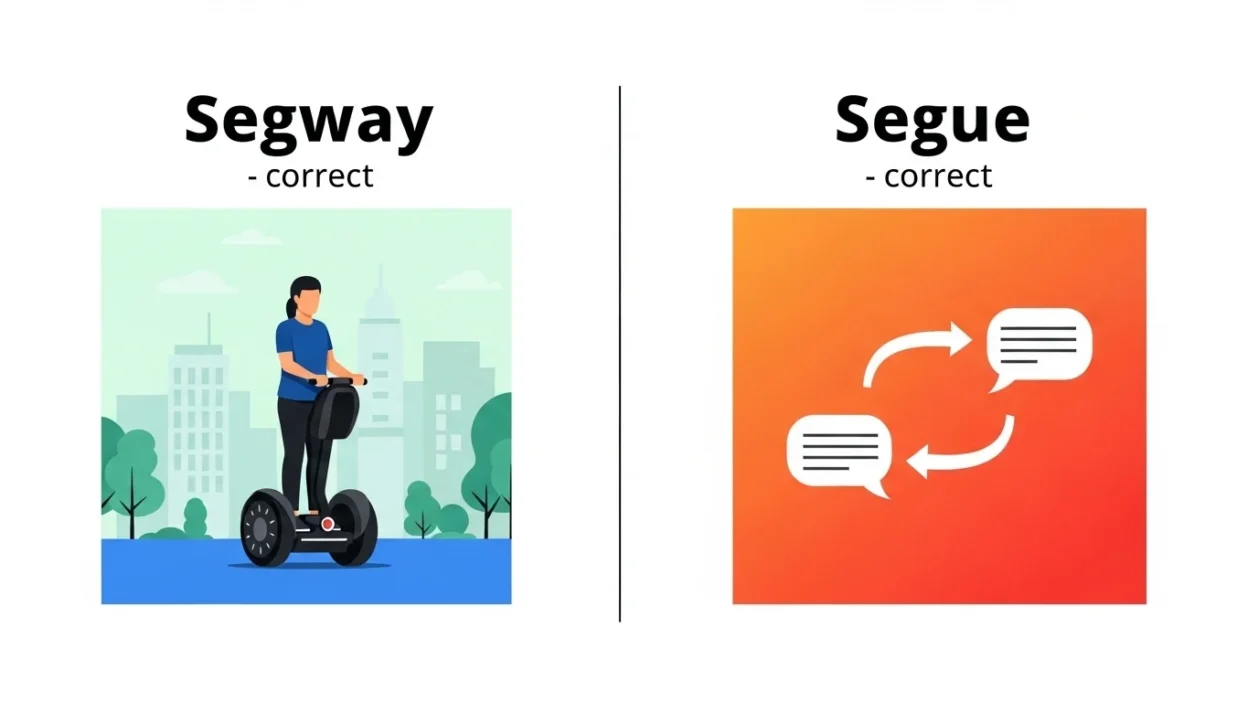
Visual Tip: A split-screen illustration showing Segway (scooter) on the left and Segue (transition arrow or smooth flow icon) on the right helps beginners remember the difference instantly.
Which One to Use and When
- Segway → When referring to the vehicle or scooter
- Segue → When referring to a transition in speech, writing, or music
Example:
- “We rented Segways for a city tour.” ✅
- “She made a smooth segue from her introduction to the main topic.” ✅
Tip: Think: transportation → Segway, transition → segue.
Common Mistakes
❌ Wrong:
- “I rode a segue through the museum.”
✅ Correct: - “I rode a Segway through the museum.”
❌ Wrong:
- “The speaker took a Segway into a new topic.”
✅ Correct: - “The speaker made a smooth segue into a new topic.”
Remember: Segway = movement; Segue = transition.
Real Life Examples
Transportation
- “Tourists often ride Segways during guided city tours.”
- “Delivery staff use Segways to navigate busy streets.”
Writing, Presentations, or Speeches
- “The essay has a smooth segue between the introduction and body.”
- “During the meeting, she made a segue from project updates to budget discussion.”
Music
- “The DJ created a seamless segue from one song to the next.”
- “Musical scores often include a segue to maintain flow.”
Emails & Social Media
- “Please include a segue when transitioning between sections of your report.”
- “We rented Segways for our team-building activity.”
Short Learning Section for Students
Memory tips:
- Segway = transportation (brand name, scooter)
- Segue = smooth transition (ideas, topics, music)
Practice:
- I rode a ______ to explore the city. → Segway
- She made a smooth ______ from one topic to another. → Segue
- The tourists rented ______s for a city tour. → Segways
- The speaker created a clever ______ during the lecture. → Segue
Mnemonic:
- Segway → scooter → movement
- Segue → transition → flow of ideas
FAQ: Segway vs Segue
Are Segway and Segue pronounced the same?
- Usually yes: /ˈsɛɡ.weɪ/ (“SEG-way”). Segue can also be /ˈsɛɡ.juː/ in formal British English.
Is Segway always capitalized?
- Yes, it’s a brand name.
Can I write “segue” about transportation?
- No, segue is only for transitions in writing, speech, or music.
Can Segway be used metaphorically like segue?
- No, Segway always refers to the scooter or vehicle.
How can I remember the difference?
- Transportation → Segway
- Transition → Segue
Can Segway be plural?
- Yes: Segways
Can segue be plural?
- Yes: segues
What are common mistakes with Segway vs Segue?
- Writing “I rode a segue” instead of Segway
- Writing “The speaker took a Segway into a new topic” instead of segue
How often do people confuse them?
- Very common, especially among students and beginners.
Conclusion
Now you clearly understand Segway vs Segue:
- Segway → Electric scooter, personal transportation, always capitalized, plural Segways
- Segue → Smooth transition in speech, writing, or music, plural segues
Next time you write or speak, remember: transport → Segway, transition → segue.
No more confusion between Segway and segue!