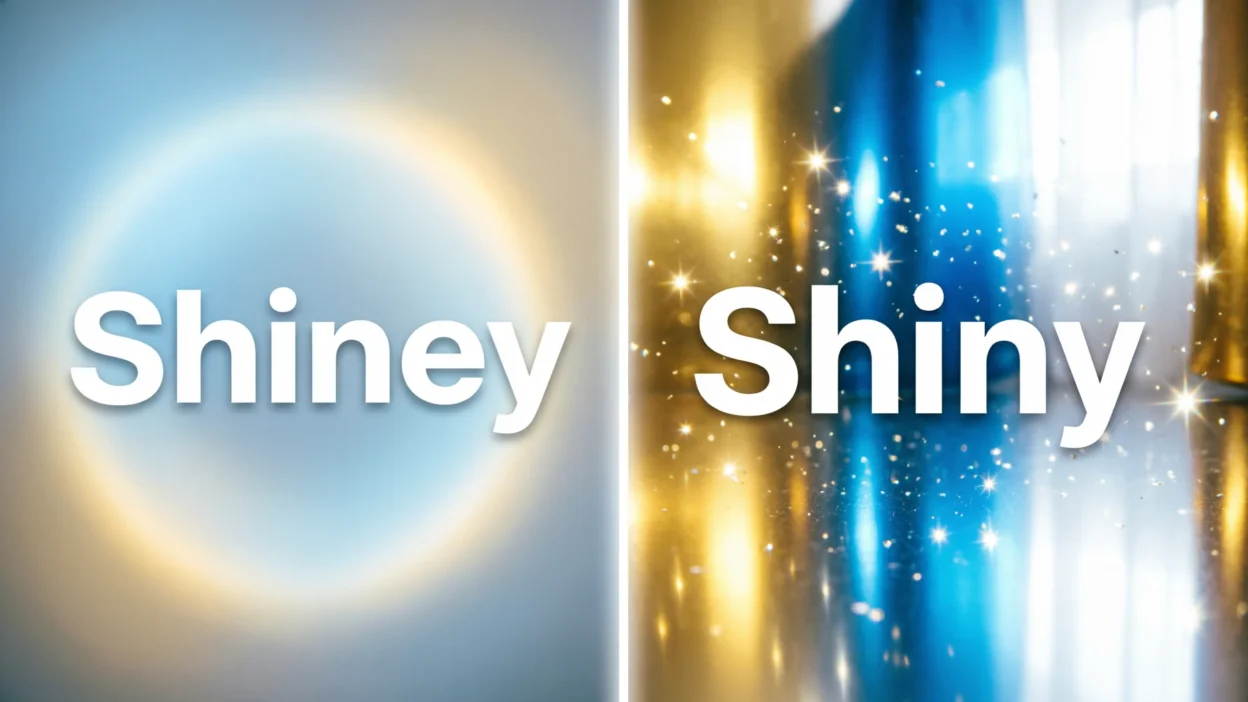
Many people get confused between “shiney” and “shiny”. Even native English speakers sometimes make mistakes with these words.
The problem is simple: one is correct, and the other is not. This article will explain everything in a very simple way so anyone can understand and use “shiny” correctly.
Why People Get Confused
The confusion comes from how English sounds.
- When we say “shiny,” it sounds a little like “shiney.”
- Some people think that adding -ey is correct, like in “honey” or “money.”
- English spelling can be tricky, and not all words follow the same rules.
Don’t worry! After reading this guide, you will never confuse them again.
Quick Answer
Here is the simple rule:
- ✅ Shiny – Correct word
- ❌ Shiney – Wrong, not used in English
Shiny means something bright, smooth, or reflecting light.
The Origin of “Shiny”
- Shiny comes from the verb “shine.”
- “Shine” means to give light or reflect light.
- When we add -y to a verb, it often becomes an adjective.
- Example: shiny = full of shine
- This is why “shiny” is correct, not “shiney.”
English has many words like this:
- Rain → rainy (full of rain)
- Sun → sunny (full of sun)
- Fun → funny (full of fun)
Notice that we never add “-ey” in these cases.
Clear Explanation of the Difference
| Word | Correct? | Meaning | Example Sentence |
| Shiny | ✅ Yes | Bright, smooth, reflecting light | “Your shoes are so shiny today!” |
| Shiney | ❌ No | Not a word | “I like your shiney shoes.” ❌ |
Key point:
- Only shiny exists in English.
- Shiney is a common spelling mistake.
Which One to Use and When
Use shiny when describing things that look bright, polished, or smooth.
- Objects: cars, shoes, phones, jewelry
- Surfaces: metal, glass, water
- Metaphorical use: “Her eyes are shiny with happiness.”
Examples:
- Correct: “The shiny table caught my attention.”
- Incorrect: “The shiney table caught my attention.” ❌
Tip: If you can say “full of shine” in your head, use shiny.
Common Mistakes People Make
- Writing shiney instead of shiny.
- Using shiny in the wrong tense: “My shoes shined today” (correct tense for verb is fine, but adjective is still shiny).
- Confusing shiny with shone (past tense of shine): “The sun shone, and my watch looked shiny.”
- Forgetting that shiny is always an adjective, not a noun.
Everyday Real-Life Examples
Emails:
- “Please bring your shiny notebook to class.”
News:
- “The city’s shiny new skyscraper opened today.”
Social Media:
- “Look at my shiny new shoes! 😍”
Daily Life:
- “I polished my car; now it’s really shiny.”
- “Her hair looks shiny after washing.”
Short Learning Section for Students & Beginners
- Step 1: Remember the word comes from shine → shiny.
- Step 2: Never add -ey.
- Step 3: Use it to describe bright, smooth, or polished things.
- Step 4: Check your spelling: shiny ✅, shiney ❌.
Practice Tip:
- Find 5 objects around you. Write one sentence for each using shiny. Example: “My spoon is shiny.”
FAQ Section
1. Can I ever use “shiney”?
- No. It is always wrong. Always write shiny.
2. Is “shiny” only for objects?
- No. You can also describe eyes, smiles, or moods.
3. How do I remember it?
- Think of shine + y = shiny. Easy!
4. Is “shiny” American or British English?
- Both. It is correct in all forms of English.
5. Can “shiny” describe feelings?
- Yes. Example: “She had shiny eyes from excitement.”
6. Is there a plural form?
- No. Shiny doesn’t change. Example: “These shoes are shiny.”
7. Can I use “shiny” for food?
- Yes. Example: “This chocolate looks shiny.”
8. What about “shined”?
- “Shined” is the past tense of shine (verb), not the adjective. Example: “I shined my shoes yesterday.”
Conclusion
English can be confusing, but “shiny” vs “shiney” is easy once you know the rule:
- ✅ Shiny = correct, bright, polished
- ❌ Shiney = wrong, don’t use
Now you can write confidently, speak correctly, and never make this mistake again. Just remember: shine → shiny, always with a Y, never EY.
Your objects, your clothes, and even your smile can be shiny every day!

Daniel Matthew is a passionate visionary who believes in creativity, purpose, and innovation. With a focus on growth and authenticity, he turns every idea into meaningful impact.