Many English learners get confused between spelt or spelled. Both are correct, but they are used in different versions of English and sometimes in different contexts.
This article explains the difference between spelt and spelled, provides spelt meaning and spelled meaning, gives spelt or spelled examples, shares common mistakes, includes pronunciation tips, and offers interactive exercises and visual cheat sheets.
By the end, you will confidently know how to use spelt and spelled correctly in daily English, writing, and speaking.
Why People Get Confused
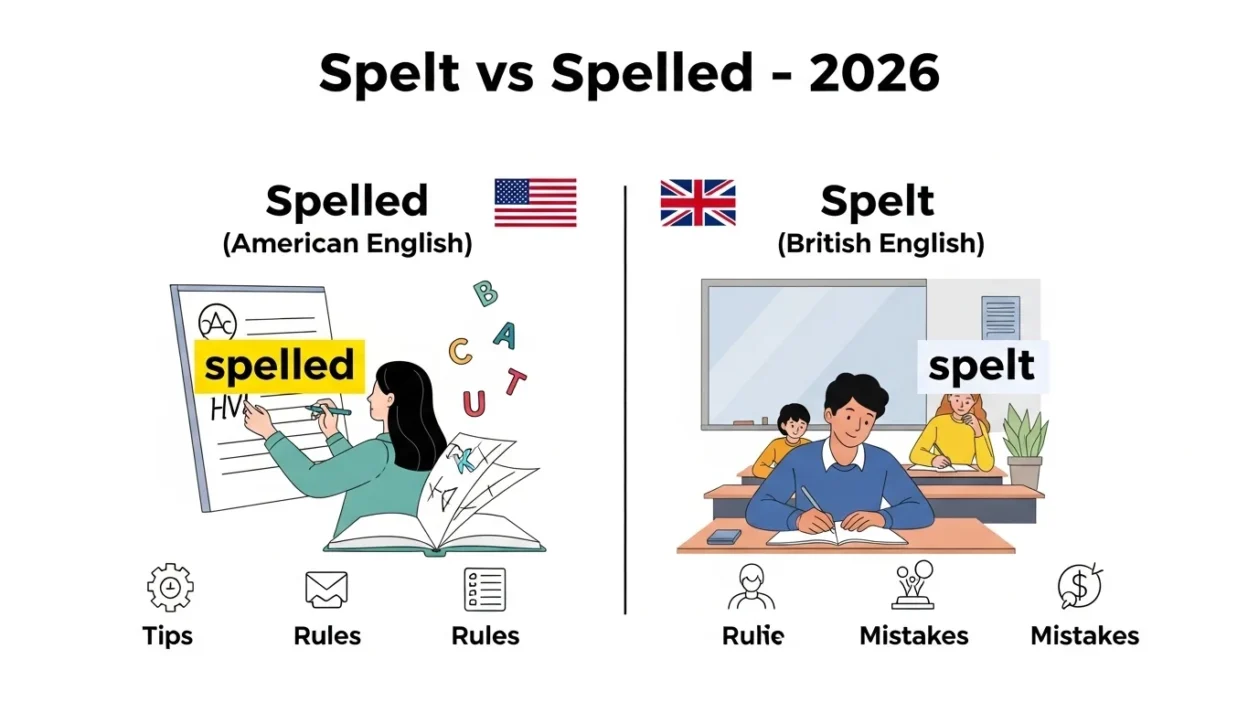
- Spelled → commonly used in American English
- Spelt → commonly used in British English
Both words are the past tense and past participle of “spell”, but usage depends on regional English.
💡 Tip: Ask yourself: “Am I writing for an American audience or a British one?”
Quick Answer: Simple Difference
| Word | Region | Meaning / Use | Example |
| Spelled | American | Past tense of spell | I spelled my name correctly. |
| Spelt | British | Past tense of spell | I spelt my name correctly. |
Easy Trick:
- Spelled = American English
- Spelt = British English
How to Use Spelt or Spelled
✅ Use Spelled (American English) When:
- Writing for Americans
- Talking about spelling past events, words, or documents
Spelt or spelled examples (US):
- I spelled “Wednesday” correctly.
- She spelled all the words right in the test.
- The teacher spelled the word slowly for the class.
✅ Use Spelt (British English) When:
- Writing for British, Australian, or Canadian English
- Talking about spelling past events, words, or documents
Spelt or spelled examples (UK):
- I spelt “Wednesday” correctly.
- She spelt all the words right in the test.
- The teacher spelt the word slowly for the class.
Pronunciation Tips 🎤
Both words sound similar but differ slightly:
- Spelled → /spɛld/
- Spelt → /spɛlt/
💡 Say it slowly: “I spelled it” (US) / “I spelt it” (UK).
Practice with these mini-sentences:
- “I spelled the word right.”
- “I spelt the word right.”
Collocations and Phrases 💡
- Spelled / Spelt + words: “spelled correctly,” “spelt incorrectly,” “well-spelled”
- Common idioms:
- “spelled out” = explained clearly
- “spelt the difference” = clarified distinctions
- “spelled out” = explained clearly
- Context tip:
- American English prefers spelled for all phrases
- British English often uses spelt, but spelled is acceptable
- American English prefers spelled for all phrases
Everyday Real Life Examples
School / Homework:
- I spelled all the words correctly in the spelling test. (US)
- I spelt all the words correctly in the spelling test. (UK)
Daily Life / Forms:
- He spelled the name wrong on the form. (US)
- He spelt the name wrong on the form. (UK)
Emails / Messages:
- “I spelled your name correctly in the email.”
- “I spelt your name correctly in the email.”
Scenario Based Practice ✏️
- I ______ (spelt/spelled) the word correctly in my homework.
- She ______ (spelt/spelled) the sentence perfectly in the test.
- In American English, we usually say ______ (spelt/spelled).
- In British English, we can say ______ (spelt/spelled).
- The teacher ______ (spelt/spelled) the instructions clearly for everyone.
✅ Answers: 1. spelt/spelled (depends on audience) 2. spelt/spelled (depends on audience) 3. spelled 4. spelt 5. spelt/spelled
Common Mistakes to Avoid ⚠️
- Using spelt in American English writing
- ❌ I spelt my name correctly. (US)
- ✅ I spelled my name correctly.
- ❌ I spelt my name correctly. (US)
- Forgetting idioms or phrases like “spelled out”
- ❌ The teacher spelt out the rule wrong.
- ✅ The teacher spelled out the rule clearly.
- ❌ The teacher spelt out the rule wrong.
💡 Mnemonic:
- “USA = spelled; UK = spelt.” ✅
FAQ Section
1. Which is correct: spelt or spelled?
Both are correct. Use spelled in American English and spelt in British English.
2. Do they mean different things?
No, both are past tense of spell.
3. Can I use spelt in the US?
Yes, it’s understood, but Americans usually use spelled.
4. Can I use spelled in the UK?
Yes, but British English often prefers spelt.
5. Are spelt and spelled common in daily English?
Yes, especially in school, homework, emails, and conversations.
6. Can I use spelt or spelled for names and words?
Yes, both apply to all words including names.
7. What phrases are common with spelt/spelled?
“Spelled out,” “spelt incorrectly,” “well-spelled,” “spelt the difference.”
8. How do I remember which to use?
Remember: USA = spelled; UK = spelt.
Cheat Sheet: Spelt vs Spelled ✅
| Word | Region | Use | Example |
| Spelled | American | Past tense of spell | I spelled “Wednesday” correctly. |
| Spelt | British | Past tense of spell | I spelt “Wednesday” correctly. |
| Common Phrases | — | — | Spelled out, spelt incorrectly, well-spelled |
Quick Takeaway:
👉 American English → spelled
👉 British English → spelt
💡 Both words mean the same; only the audience matters
Conclusion
Now you clearly understand spelt or spelled and how to use them correctly:
- Use spelled for American English
- Use spelt for British English
By practicing with scenario exercises, cheat sheets, pronunciation tips, collocations, and real life examples, beginners can confidently use spelt and spelled in writing, speaking, and daily English.

David Robert is a passionate innovator driven by creativity, vision, and purpose. He turns bold ideas into impactful realities through focus, leadership, and dedication.