Quick Answer: Sung vs Sang
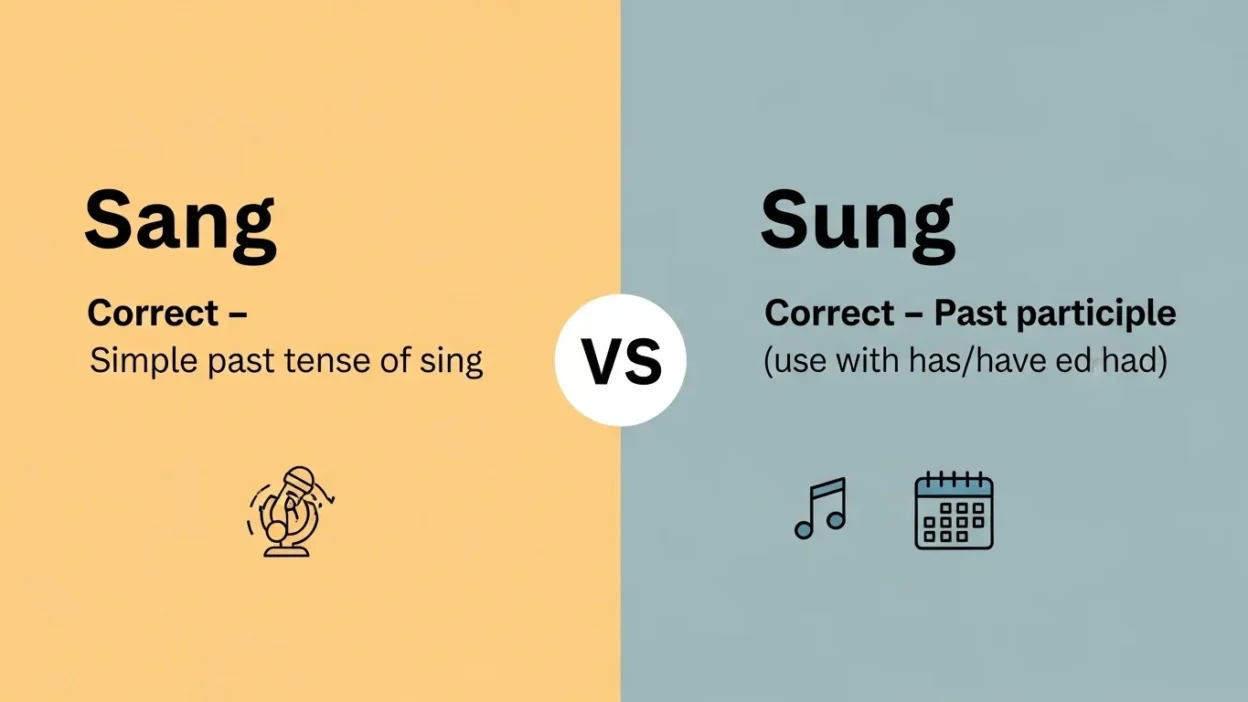
Sang is the simple past tense of “sing,” used alone for completed actions in the past, while sung is the past participle used with helping verbs like has, have, or had.
| Word | Meaning | Example |
| Sang | Simple past tense of “sing” | She sang her favorite song yesterday. |
| Sung | Past participle of “sing” (used with has/have/had) | She has sung in many concerts. |
Many learners, students and beginners confuse sung vs sang because both describe past actions of singing.
- Sang → simple past, used alone.
- Sung → past participle, used with has, have, or had.
Simple Rule:
If there’s a helping verb → Sung. If no helping verb → Sang.
This article explains the difference between sung and sang, provides examples in emails, news, and conversation, highlights common mistakes, and gives easy-to-remember tips for students.
Sang Meaning in English: Definition and Usage
Sang is the simple past tense of the verb sing, used for actions completed in the past.
Examples of Sang in Sentences
- He sang beautifully at the concert.
- They sang all the songs during the festival.
- I sang in the school choir yesterday.
Use sang when describing an action that happened in the past without a helping verb.
Sung Meaning in English: Definition and Usage
Sung is the past participle of sing, used with helping verbs has, have, or had.
Examples of Sung in Sentences
- She has sung at many weddings.
- They have sung this song before.
- He had sung in the choir for years before moving.
Use sung when describing a past action connected to the present or another past event.
Origin and Background of Sung vs Sang
The confusion comes from English irregular verbs:
- Sing → Sang → Sung
Other irregular verbs with similar patterns:
| Base Verb | Simple Past | Past Participle |
| Ring | Rang | Rung |
| Drink | Drank | Drunk |
| Begin | Began | Begun |
Sung vs Sang: Key Difference
| Feature | Sang | Sung |
| Tense | Simple past | Past participle |
| Used With | Alone | Has, have, had |
| Meaning | Completed action in the past | Past action connected to present or another past event |
| Example | I sang a song yesterday. | I have sung this song before. |
How to Use Sung and Sang Correctly
In Emails and Messages
- Yesterday, I sang at the school assembly.
- I have sung this song many times for charity events.
In News Articles
- The choir sang beautifully at the festival last week.
- The soloist has sung in over fifty performances worldwide.
In Conversations
- He sang a beautiful song at the wedding.
- I have sung this song before at school.
✅ Tip: Ask yourself: Is there a helping verb (has, have, had)? → Use sung. Otherwise → Use sang.
Common Mistakes People Make
- Using sung without a helping verb
- ❌ Yesterday, I sung a song.
- ✔ Yesterday, I sang a song.
- Using sang with a helping verb
- ❌ She has sang many songs.
- ✔ She has sung many songs.
- Mixing up sung and sang in emails or essays
- Always check for a helping verb to determine correct usage.
Everyday Examples of Sung and Sang
In Emails or Messages:
- I sang my favorite song during the online meeting.
- She has sung in many online events this year.
In News Articles:
- The choir sang beautifully at the charity concert.
- The lead singer has sung in over 100 performances worldwide.
In Conversations:
- He sang at the birthday party yesterday.
- I have sung this song before at school.
Visual Memory Tip for Students
| Word | Memory Tip |
| Sang | Simple past → no helping verb |
| Sung | Past participle → use with has, have, had |
This visual table helps learners remember the difference instantly.
FAQ About Sung vs Sang
Q1: What is the difference between sung and sang?
- Sang = simple past; Sung = past participle with has/have/had.
Q2: Can I use sung without a helping verb?
- No, sung must follow has, have, or had.
Q3: Can I use sang with a helping verb?
- No, sang is simple past and cannot be combined with has/have/had.
Q4: How do I remember sung vs sang?
- Think: sang → simple past, sung → use with has/have/had.
Q5: Sung vs sang in emails or messages?
- Correct: “I have sung this song before.”
- Correct: “Yesterday, I sang a song.”
Q6: Common mistakes learners make?
- Using sung without a helping verb or sang with a helping verb.
Q7: Can sung or sang be used for future actions?
- No, they only describe past actions.
Q8: Sung vs sang examples for students?
- I sang in the school choir yesterday.
- I have sung in many school concerts.
Q9: Sung vs sang usage in conversation?
- “He sang at the party last night.”
- “I have sung this song before at the school event.”
Conclusion
The confusion between sung vs sang is easy to fix:
- ✅ Sang → simple past, action completed in the past
- ✅ Sung → past participle, use with has, have, had
Memory tip: “Sing → Sang → Sung. Helping verb? → Sung. No helping verb? → Sang.”