Many people feel confused when they see the words tomatoes and tomatos. They look very similar, and the difference is only one letter. This small change can cause big confusion, especially for students, learners and beginners.
You may have seen tomatos written online, in messages, or even in schoolwork. You might wonder, “Is this correct?” or “Which one should I use?”
This article will remove all confusion. By the end, you will clearly understand the difference between tomatoes vs tomatos, and you will know which one is correct and why.
Let’s make it simple, friendly, and easy to learn.
Quick Answer: Tomatoes vs Tomatos
Here is the short and clear answer:
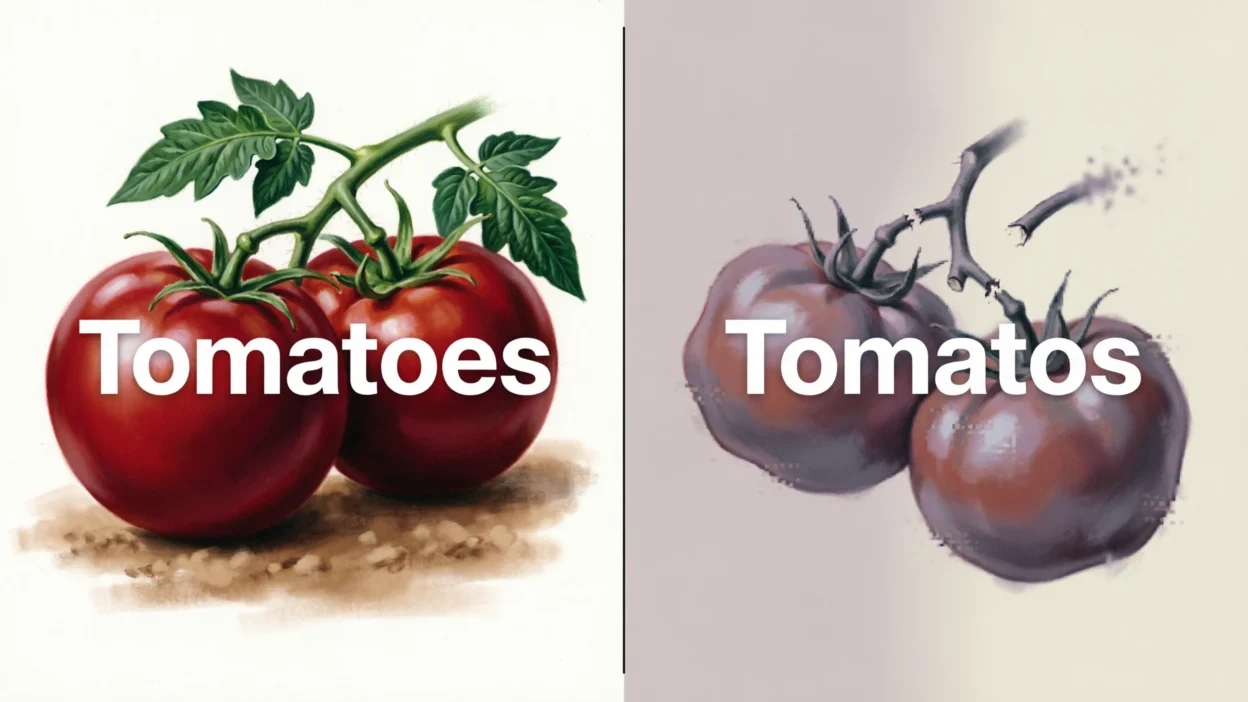
- Tomatoes ✅ is the correct plural spelling of tomato.
- Tomatos ❌ is incorrect and should not be used.
- The letter “e” in tomatoes is very important.
- Always use tomatoes in writing, speaking, exams, and daily life.
In simple words:
👉 Tomatoes = correct
👉 Tomatos = wrong
Simple Origin and Background
To understand why tomatoes is correct, let’s look at where the word tomato comes from.
The word tomato came into English from Spanish. In Spanish, the word is tomate. Over time, English kept the word tomato, but changed how it becomes plural.
In English:
- Many words ending in -o form their plural by adding -es, not just -s.
Examples:
- potato → potatoes
- tomato → tomatoes
- hero → heroes
- echo → echoes
So, tomato becomes tomatoes, not tomatos.
Clear Explanation of the Difference
Now let’s clearly explain tomatoes vs tomatos.
Tomatoes (Correct Form)
- Tomatoes is the plural of tomato.
- It follows standard English grammar rules.
- It is used in books, schools, news, exams, and formal writing.
Example:
- I bought fresh tomatoes from the market.
Tomatos (Incorrect Form)
- Tomatos is not correct in standard English.
- It is a common spelling mistake.
- You may see it in casual online writing, but it is not accepted.
Example:
- ❌ I bought fresh tomatos from the market. (Wrong)
Comparison Table: Tomatoes vs Tomatos
| Feature | Tomatoes | Tomatos |
| Correct spelling | ✅ Yes | ❌ No |
| Grammar rule | Follows English rules | Breaks English rules |
| Used in school | ✅ Yes | ❌ No |
| Used in exams | ✅ Yes | ❌ No |
| Used in books | ✅ Yes | ❌ No |
| Common mistake | ❌ No | ✅ Yes |
| Meaning | More than one tomato | Same meaning, wrong form |
Which One to Use and When
You should always use “tomatoes” when you want to talk about more than one tomato.
Use “tomatoes” when:
- Talking about food
- Writing school assignments
- Writing emails
- Posting on social media
- Writing stories
- Speaking English
Examples:
- I need three tomatoes for the recipe.
- These tomatoes are very fresh.
- She bought red tomatoes for dinner.
Never use “tomatos”
Even though it looks easy, tomatos is always wrong.
Common Mistakes People Make
Many learners and even native speakers make small spelling mistakes. Here are some common mistakes related to tomatoes:
1. Forgetting the “e”
- ❌ tomatos
- ✅ tomatoes
2. Thinking all -o words add only “s”
Some words ending in -o do add -s, but many add -es.
Correct:
- tomato → tomatoes
- potato → potatoes
3. Copying wrong spelling from social media
People often write fast online and make mistakes. Do not copy incorrect spelling.
Everyday Real-Life Examples
Let’s see how tomatoes is used in daily life.
1. In Emails
- Please buy tomatoes from the shop on your way home.
- We need fresh tomatoes for tonight’s dinner.
2. In News
- Farmers produced more tomatoes this year.
- The price of tomatoes has increased.
3. On Social Media
- Just made a salad with fresh tomatoes 🥗
- Love cooking with organic tomatoes!
4. In Daily Conversation
- These tomatoes are very sweet.
- Can you cut the tomatoes for me?
Short Learning Section for Students and Beginners
Let’s learn in a very simple way.
Rule to Remember
When a word ends in -o, and it is about food or objects, we often add -es to make it plural.
Examples:
- tomato → tomatoes
- potato → potatoes
- mango → mangoes
Easy Memory Trick
Think of this sentence:
“Tomatoes need extra E.”
This will help you remember to add -es.
Frequently Asked Questions
1. Is “tomatos” ever correct?
No. Tomatos is never correct in standard English.
2. Why do we add “es” to tomato?
Because many English words ending in -o form their plural with -es.
3. Can I use tomatos in casual writing?
No. Even in casual writing, tomatoes is the correct form.
4. Is tomatoes used in American and British English?
Yes. Tomatoes is correct in both American and British English.
5. What is the singular form?
The singular form is tomato.
Example:
- I ate one tomato.
6. Why do people still write tomatos?
Because:
- It looks simple
- People forget grammar rules
- Typing fast causes mistakes
7. Is “tomato’s” correct?
No. Tomato’s shows ownership, not plural.
Example:
- The tomato’s color is red. (Correct for possession)
8. What is the easiest way to remember?
Remember:
👉 Tomato + es = Tomatoes
Conclusion
The difference between tomatoes vs tomatos is very simple:
- Tomatoes is the correct plural form.
- Tomatos is incorrect and should not be used.
This small spelling rule can make your English clearer, better, and more correct. Whether you are writing homework, emails, messages, or posts, always choose tomatoes.
Now you can confidently use this word without any confusion. Keep learning, keep practicing, and enjoy improving your English one simple step at a time! 😊

Michael is a passionate thinker and visionary creator who turns ideas into action. With focus and integrity, he strives to make every project purposeful and inspiring.