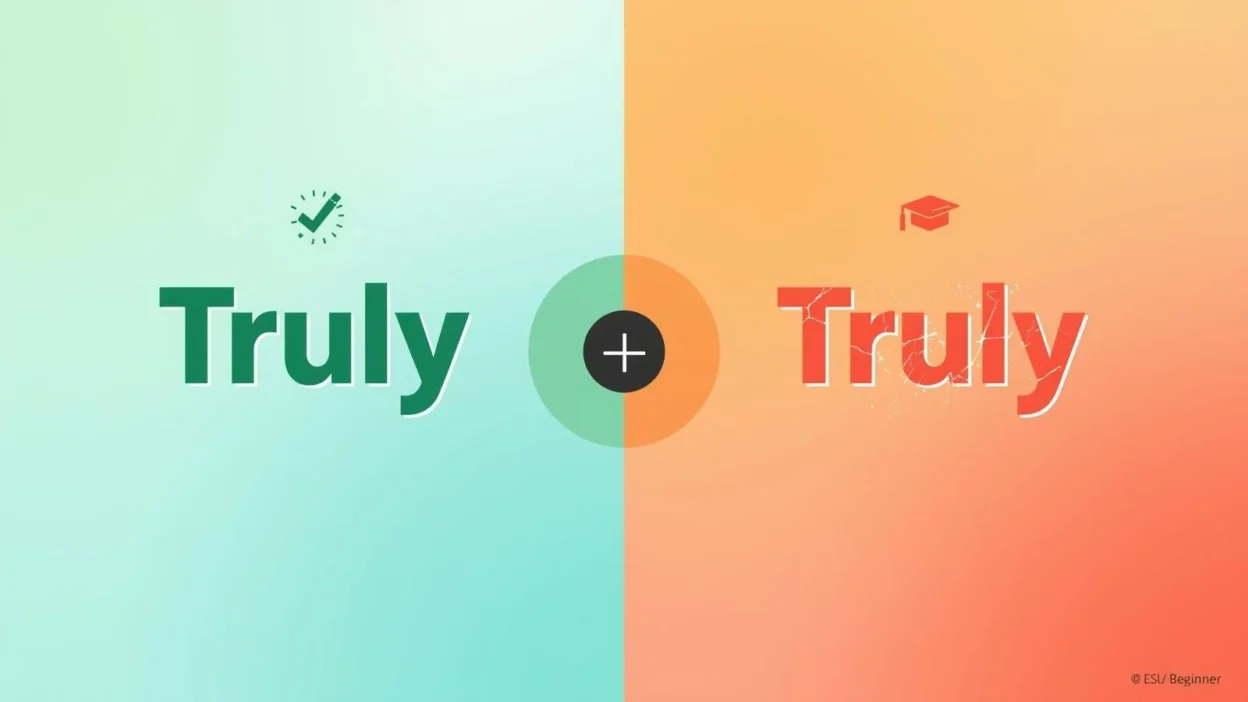
Many learners confuse truely or truly because they sound the same. But here’s the truth: only truly is correct.
Quick Answer:
- Truly ✔ → correct spelling, meaning “genuinely, sincerely, honestly”
- Truely ❌ → common misspelling
Memory Trick:
Think “truly = true + ly”. There is no “e” after “u”.
By the end of this guide, you’ll understand the difference between truely and truly, know how to spell truly correctly, and avoid common mistakes like writing truely meaning truly.
Quick Answer: The Simple Rule
- Truly → correct spelling; genuinely, sincerely, honestly
- Truely → incorrect spelling
Examples:
- “I am truly sorry for the mistake.” ✔
- “She is truly talented.” ✔
- “I am truely sorry.” ❌
Tip: Always remember: “Truly = true + ly”. Avoid truely in any writing.
Comparison Table: Truely vs Truly
| Word | Function | Example | Quick Tip |
| Truly | Correct spelling; means genuinely, sincerely, honestly | “I am truly grateful.” | Always use truly. |
| Truely | Incorrect spelling | “I am truely grateful.” ❌ | Avoid this spelling. |
✔ Quick Tip: “If it sounds right but has an extra ‘e’ → it’s wrong.”
Real Life Relatable Examples
Classroom / Writing
- “I truly enjoyed the lesson.”
- “Her explanation is truly clear.”
Emails
- “Thank you, I truly appreciate your help.”
- ❌ “Thank you, I truely appreciate your help.”
Social Media / Text Messages
- “I truly love this photo!”
- ❌ “I truely love this photo!”
Texting / Casual Conversations
- “I am truly excited for the trip.”
- “She truly loves chocolate.”
- ❌ “I am truely excited for the trip.”
Letters / Formal Writing
- “I am truly grateful for your support.”
- ❌ “I am truely grateful for your support.”
News / Articles
- “The charity work was truly inspiring.”
- ❌ “The charity work was truely inspiring.”
These examples cover truly vs truely examples in multiple contexts.
Common Mistakes to Avoid
❌ Mistake 1: Writing “truely” instead of “truly”
“I am truely sorry.” ❌
✔ Correct: “I am truly sorry.”
❌ Mistake 2: Forgetting “ly” in adverbs
“I feel true happy.” ❌
✔ Correct: “I feel truly happy.”
❌ Mistake 3: Using “truely” in formal writing
✔ Tip: Always use truly in professional emails, articles, or school work.
❌ Mistake 4: Confusing truely meaning truly in casual writing
✔ Tip: Only truly is correct.
Mini Practice: Test Yourself
Fill in the blanks with the correct word:
- I am ___ grateful for your help.
- She is ___ talented in painting.
- This is ___ amazing!
- I ___ appreciate your support.
- ❌ Avoid ___ spelling in your essay.
✔ Answers: 1. Truly | 2. Truly | 3. Truly | 4. Truly | 5. Truely
Short Learning Section
Memory Trick
- Truly = true + ly
- Truely ❌ → wrong, don’t use
Examples:
- “I am truly sorry.” → correct
- “I am truely sorry.” → incorrect
Practice using truly vs truely in sentences daily to internalize correct spelling.
FAQ
1. Is “truely” ever correct?
No, it is always a misspelling. Only truly is correct.
2. What does “truly” mean?
It means “genuinely, sincerely, or honestly.”
3. How do I remember the spelling?
Think: “truly = true + ly.”
4. Can I use “truly” in emails and articles?
Yes, it’s perfect for professional and casual writing.
5. Common mistakes with truly vs truely?
- Writing truely instead of truly
- Forgetting the “ly” in the adverb
6. Beginner tip:
Practice using truly vs truely in sentences every day.
7. How to check your sentence?
Ask: “Does it mean genuinely, sincerely, or honestly? If yes → truly.”
8. Examples for beginners:
- “I am truly happy with your work.”
- ❌ “I am truely happy with your work.”
9. How to remember truly spelling easily?
Break it into true + ly. That’s it!
Conclusion: Use Truly Confidently
Now you can confidently use truly:
- Correct spelling: truly
- Meaning: genuinely, sincerely, honestly
- Truely ❌ → always avoid
Confidence Tip:
Remember: truly = true + ly ✅
Using truly correctly makes your writing clear, professional, and error free.

Andrew Christopher is a passionate visionary who blends creativity with purpose to bring ideas to life. With a focus on innovation and integrity, he inspires growth and lasting impact.