Quick Answer: Web Site vs Website
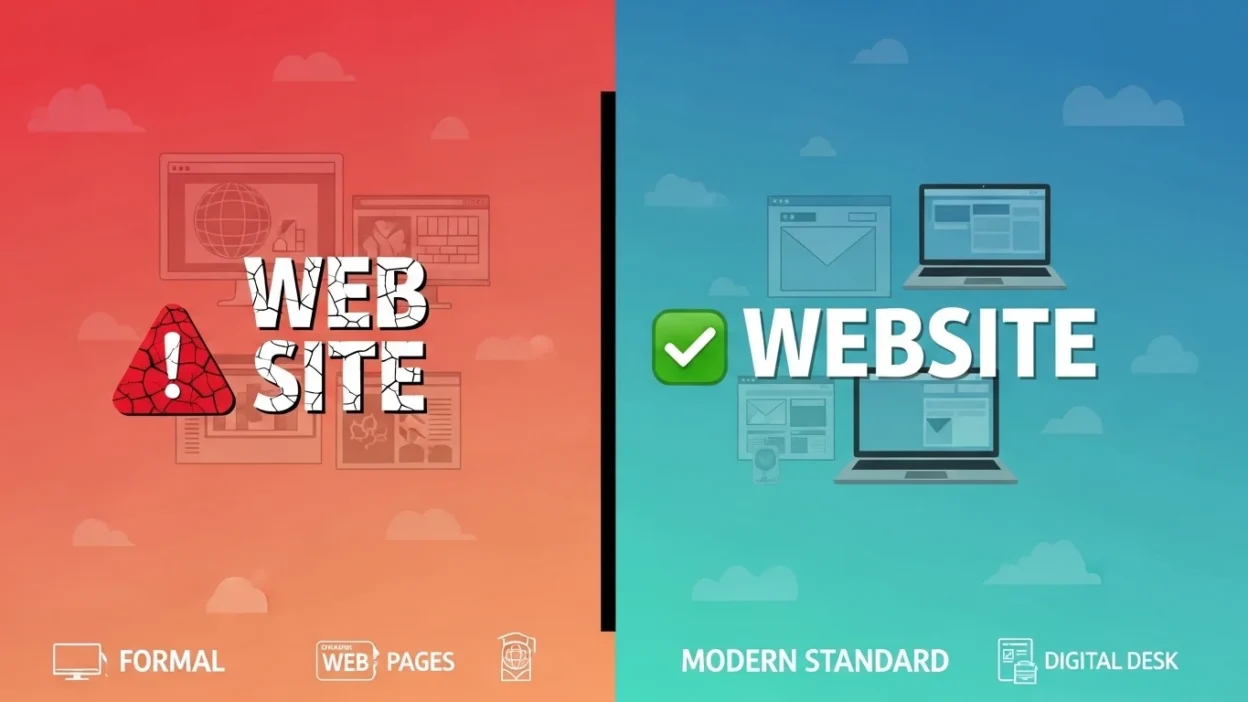
Website = modern, standard spelling; Web site = older, formal spelling.
Both refer to an online collection of web pages, an internet address, or a digital platform.
Memory Tip: Website = modern & standard, Web site = older/formal
Why People Get Confused
Many learners, students, and ESL users mix up web site vs website because:
- Both words sound the same
- Both mean the same thing: an online collection of web pages
- Beginners may not know which spelling is correct in modern English
Example:
- ❌ I am building a new web site for my portfolio.
- ✔ I am building a website for my portfolio.
Origin and Historical Background
- Web site was the original term in the early 1990s.
- Early technical writing used two words: “web” + “site.”
- Over time, website (one word) became the modern standard spelling.
- Web site is still used in historical, archival, or formal contexts, especially in older technical papers.
Tip: Website = modern; Web site = historical/formal usage
Website Meaning and Usage
Website refers to:
- An online collection of web pages
- An internet address or digital platform
- A platform for information, services, or e-commerce
Examples of Website
- I launched my new website last week.
- This website offers free tutorials for students.
- Every company needs a professional website today.
- Students can submit their assignments through the university’s website.
Tip: Use website in all modern writing, blogs, emails, and social media.
Web Site Meaning and Usage
Web site has the same meaning but is:
- Older and more formal
- Mostly used in historical, technical, or archival content
Examples of Web Site
- In 1998, the company launched its first web site.
- The manual explains how to update a web site.
- Early web browsers displayed each web site differently.
Tip: Use web site only when referring to historical or formal contexts.
Web Site vs Website: Key Difference
| Word | Spelling Style | Meaning | Example |
| Website | Modern / Standard | Online collection of web pages, internet address, digital platform | I created a new website for my portfolio. |
| Web site | Older / Formal | Online collection of web pages, internet address, digital platform | The 1995 report described the company’s first web site. |
Rule: Both mean the same. Website = modern usage, Web site = historical/formal usage.
Common Mistakes
- Using “web site” in modern writing
❌ Visit our web site for updates.
✔ Visit our website for updates. - Mixing spelling in the same document
- Stick to one spelling for consistency
- Stick to one spelling for consistency
- Overcorrecting historical references
- Keep early references as web site to preserve accuracy
- Keep early references as web site to preserve accuracy
Everyday Examples
Daily Life
- I found a helpful tutorial on a cooking website.
- The article referenced an early web site from 1997.
Emails / Professional Writing
- Check our new website for company updates. (modern)
- The report details how each web site was structured in 1990s technical manuals. (historical/formal)
Social Media
- Share your favorite educational website!
- Some old web sites still exist from the early internet era.
Academic / School Context
- Students must cite credible websites in their research papers.
- Early web sites had very basic designs compared to modern digital platforms.
Technical / Historical Context
- The 1995 web site included basic HTML pages.
- Today, every website requires responsive design and modern navigation.
Easy Learning Tips
- Spelling Rule:
- Website = modern, standard
- Web site = older, formal
- Context Matters:
- Use website in blogs, emails, social media, or modern references
- Use web site in historical, technical, or archival writing
- Practice Sentences:
- I am designing a website/web site for my school project.
- Early websites/web sites had very limited graphics.
- Memory Tip:
- Website = one word = modern & standard
- Web site = two words = old-school/formal
Frequently Asked Questions (FAQ)
1. What is the difference between web site and website?
Website = modern standard spelling, web site = older/formal spelling. Both mean an online collection of web pages or internet address.
2. Which spelling is more common today?
Website is overwhelmingly more common and preferred in modern English worldwide.
3. Can I use web site instead of website?
Yes, but only in historical, technical, or formal contexts. Use website for modern writing.
4. Are website and web site pronounced the same?
Yes, both are pronounced /ˈwɛbˌsaɪt/.
5. Can I mix website and web site in one document?
No. Stick to one spelling for clarity and professionalism.
6. Is website accepted worldwide?
Yes, website is the accepted modern spelling in all English-speaking countries.
7. Should I change older references to web site to website?
No. Keep historical references as web site for accuracy.
8. Are website and web site commonly confused?
Yes, especially for learners and beginners, but the difference is only spelling.
9. How do I remember web site vs website easily?
Website = modern & one word; Web site = older/formal & two words. Think “modern = one word, old-school = two words.”
Conclusion
The confusion between web site vs website is simple to solve:
- Website = modern, standard spelling
- Web site = older, formal spelling
- Both refer to an online collection of web pages, digital platform, or internet address
Examples to Remember:
- I created a new website for my portfolio. (modern)
- The historical article described an early web site from 1996. (formal/historical)
Memory Tip: Website = modern & standard, Web site = older/formal
Once you remember this, you’ll never mix up web site vs website again!

Andrew Christopher is a passionate visionary who blends creativity with purpose to bring ideas to life. With a focus on innovation and integrity, he inspires growth and lasting impact.