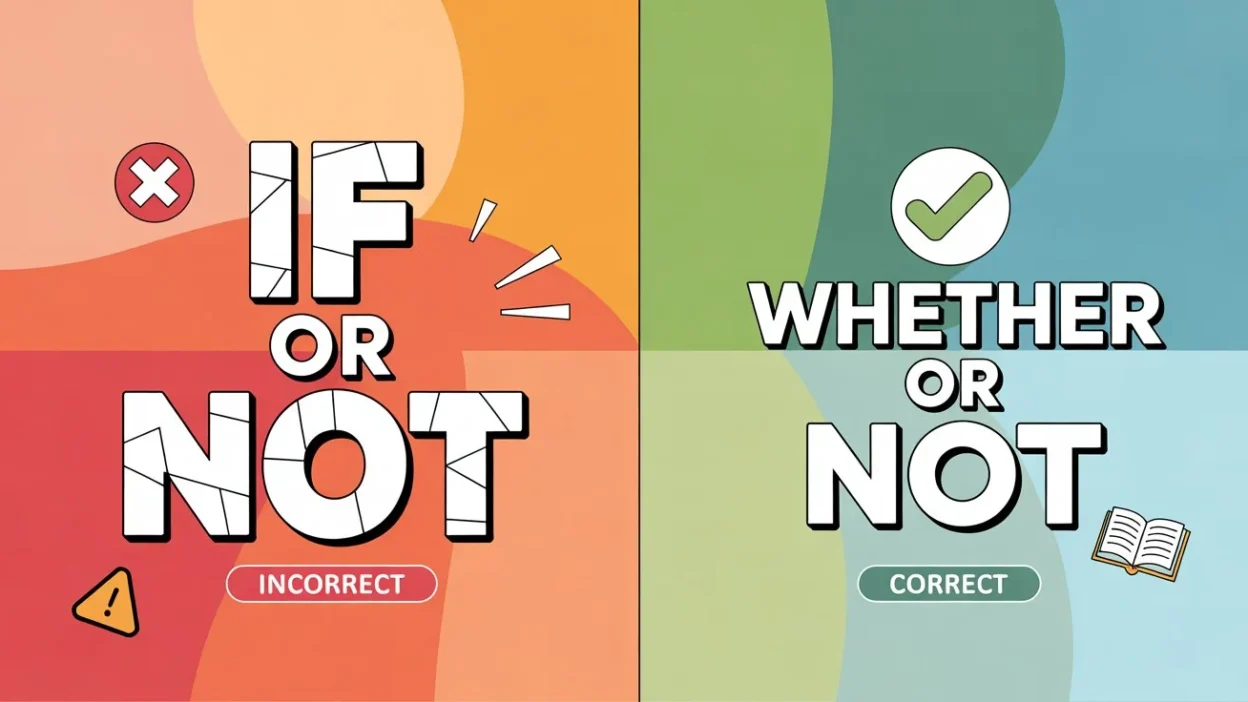
Many students and English learners often get confused about the phrase whether or not. Questions like:
- What does whether or not mean?
- How do I use whether or not in a sentence?
- Can I replace whether or not with if?
are very common.
The phrase whether or not is used when two possibilities exist, but the outcome does not change. Understanding it clearly will help you write better, clearer sentences in emails, essays, and everyday conversations.
Right at the start, here’s the quick answer for Google searches:
Short Answer:
Whether or not means “regardless of if something happens or not.”
It shows that the result is the same in both situations.
This article explains whether or not meaning, grammar rules, examples, pronunciation, and common mistakes in simple English for students and beginners.
What Does Whether or Not Mean?
The phrase whether or not is used when both possibilities are considered, but the result stays the same.
Example:
- I will go to the park whether or not it rains.
Meaning: I will go if it rains and if it does not rain.
Other examples:
- She will attend the meeting whether or not she receives an invitation.
- We will finish the project whether or not anyone helps us.
Tip: If you can imagine two outcomes but the final decision is the same, use whether or not.
How to Use Whether or Not
Here are the main rules for using whether or not.
1. Decisions that do not change
- Example:
We will start the meeting whether or not the manager arrives.
2. Determination or commitment
- Example:
I will complete the task whether or not I get help.
3. Emphasizing both possibilities
- Example:
I will support you whether or not others agree.
Tip:
Sometimes whether alone is enough.
- Correct: I don’t know whether she will come.
- Also correct: I don’t know whether or not she will come.
Whether vs Whether or Not
| Phrase | Meaning | Example |
| Whether | Shows uncertainty | I don’t know whether he will come. |
| Whether or Not | Shows result is the same in both cases | I will go whether or not he comes. |
Quick Tip:
- Whether = uncertainty
- Whether or not = both possibilities included
Whether or Not vs If
Many learners confuse whether or not vs if.
| Word | Usage | Example |
| Whether | Choice or uncertainty | I don’t know whether she called. |
| If | Condition | I will go if she calls. |
| Whether or Not | Result does not change | I will go whether or not she calls. |
Important: Never write if or not.
- Incorrect: I will go if or not he comes.
- Correct: I will go whether or not he comes.
Pronunciation of Whether or Not
For learners, pronunciation helps avoid mistakes.
Whether or Not → WHEH-ther or NOT
Listening and repeating will help you remember the phrase and spelling.
Common Mistakes with Whether or Not
- Using “if or not” instead
- Incorrect: I will attend the meeting if or not he comes.
- Correct: I will attend the meeting whether or not he comes.
- Incorrect: I will attend the meeting if or not he comes.
- Unnecessary use
- Sometimes “whether” alone is enough.
- Sometimes “whether” alone is enough.
- Confusing “whether” with “weather”
- Weather → climate
- Whether → choice or possibility
- Weather → climate
Example:
- The weather is sunny today.
- I don’t know whether it will rain tomorrow.
Whether or Not in a Sentence
Here are simple sentence examples:
- I will attend the meeting whether or not you come.
- She will finish her homework whether or not her friends help her.
- The event will happen whether or not the weather improves.
- They will complete the project whether or not extra time is given.
Tip: These are beginner-friendly whether or not sentence examples you can practice with.
Quick Practice Quiz
Choose the correct phrase:
- I will attend the event ___ it rains.
- a) whether or not
- b) if or not
Answer: a) whether or not
- a) whether or not
- She will finish the work ___ she receives help.
- a) whether or not
- b) if or not
Answer: a) whether or not
- a) whether or not
Everyday Examples
Emails
Please confirm whether or not you will attend the meeting.
Conversations
I will finish my homework whether or not my friends help me.
Social Media
I’m going on this trip whether or not anyone joins me.
Work Situations
The event will happen whether or not the weather is good.
These examples show practical everyday usage.
Learning Tips for Students and Beginners
Tip 1: Think about two possibilities
Ask yourself:
- Can it happen?
- Can it not happen?
If both outcomes are possible and the result stays the same, use whether or not.
Tip 2: Check the result
If the result stays the same, then whether or not is correct.
Example:
I will finish my work whether or not the internet works.
Tip 3: Practice writing
Try these:
- I will go to school whether or not it rains.
- She will continue studying whether or not she feels tired.
- The team will play whether or not the stadium is full.
Frequently Asked Questions (FAQ)
What does whether or not mean?
It means something will happen regardless of two possible outcomes.
Can I use whether instead of whether or not?
Yes, sometimes whether alone is enough when expressing uncertainty.
Is whether or not formal?
It can be used in both formal and informal writing.
Can “if” replace whether or not?
No. If cannot replace whether or not in sentences like:
- Correct: I will go whether or not he comes.
- Incorrect: I will go if or not he comes.
How do I pronounce whether or not?
WHEH-ther or NOT
When should I use whether or not?
Use it when both possibilities exist but the result stays the same.
Conclusion
The phrase whether or not is simple once you remember this rule:
- Whether = uncertainty
- Whether or not = both outcomes considered, result stays the same
Example:
I will support you whether or not others agree.
Using whether or not correctly helps students, learners and beginners write clearer, stronger English sentences in everyday life, school assignments, and professional communication.

Michael is a passionate thinker and visionary creator who turns ideas into action. With focus and integrity, he strives to make every project purposeful and inspiring.