Many people, especially students and learners, feel confused when they see yea vs nay. These short words look simple, but their meaning and use can be tricky.
The main reason for confusion is that yea does not sound like it looks, and nay can be mistaken for “no” in casual speech. People also mix them up with yes and no or don’t know what does yea mean or what does nay mean.
This guide explains the difference between yea and nay in very simple English. After reading, you will know exactly when and how to use them in real life.
Quick Answer: Yea vs Nay Meaning
Here is the fastest way to understand these words:
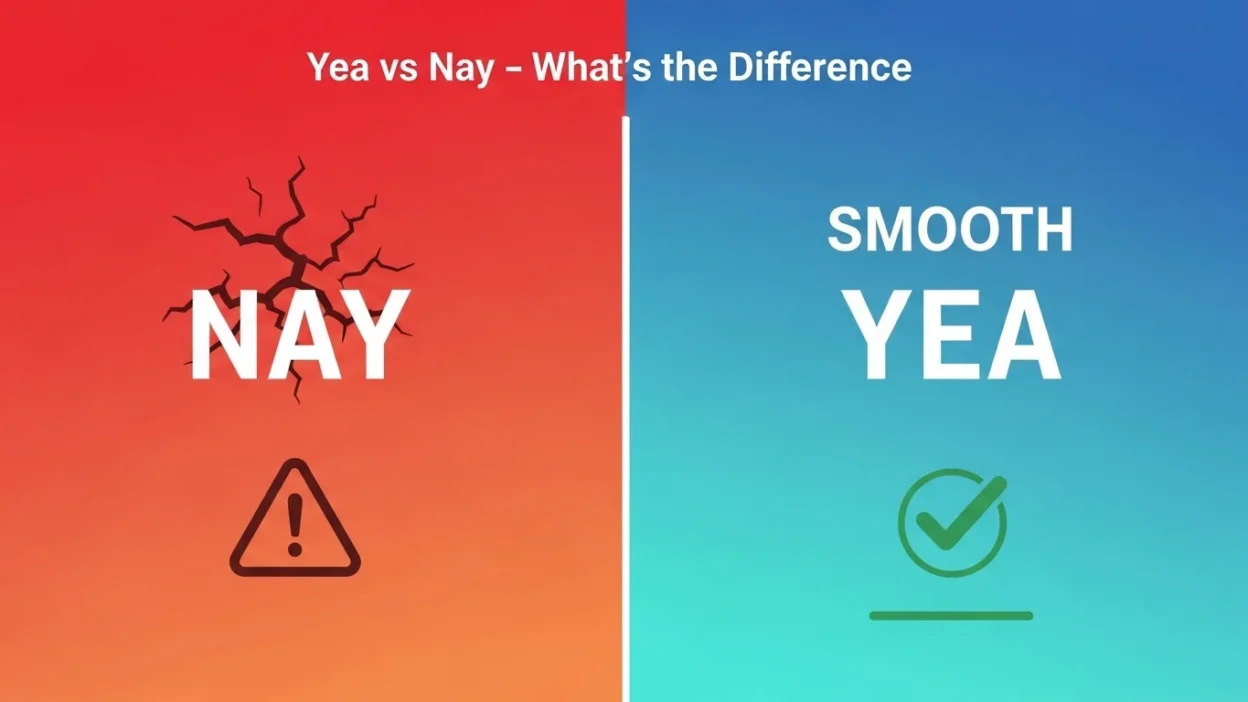
- Yea = Yes (agreement, support, approval)
- Nay = No (disagreement, rejection, disapproval)
Remember:
- Say yea when you agree
- Say nay when you disagree
Origin and Background
Yea and nay are very old English words used hundreds of years ago. They were common in:
- Government meetings
- Voting procedures
- Formal decisions
- Yea meaning: yes, I agree, I support
- Nay meaning: no, I disagree, I do not support
Today, they are still used in formal situations, official news reports, and yea and nay in voting. Knowing this helps you understand old texts and formal discussions.
Yea vs Nay: Clear Explanation
What Does “Yea” Mean?
- Yea = yes, I agree, I support
- Shows agreement, approval, or support
Examples:
- “All in favor, say yea.”
- “I vote yea on this proposal.”
Pronunciation: /jeɪ/ (sounds like “yay”)
What Does “Nay” Mean?
- Nay = no, I disagree, I do not support
- Shows disagreement or rejection
Examples:
- “Those against, say nay.”
- “I vote nay on this plan.”
Pronunciation: /neɪ/ (sounds like “nay”)
Yea vs Nay Comparison Table
| Feature | Yea | Nay |
| Meaning | Yes | No |
| Shows | Agreement | Disagreement |
| Use | Voting, meetings, formal talk | Voting, meetings, formal talk |
| Tone | Positive | Negative |
| Example | “I vote yea.” | “I vote nay.” |
| Similar Words | Yes | No |
| Pronunciation | /jeɪ/ | /neɪ/ |
When to Use Yea and Nay
Use “Yea” When:
- You agree with a plan or idea
- You support a decision
- You are voting yes in a meeting or poll
Examples:
- “I say yea to this idea.”
- “Most of the team voted yea.”
- “Yea! I want to join the project.” (informal, playful)
Use “Nay” When:
- You disagree or reject an idea
- You do not support a decision
- You are voting no
Examples:
- “I vote nay because I disagree.”
- “Many members said nay in the meeting.”
- “Nay, I don’t want that option.” (formal/serious)
Common Yea vs Nay Mistakes
- Confusing “yea” with “yeah”
- Yeah = informal yes
- Yea = formal yes, often in voting
- Yeah = informal yes
- Pronouncing “yea” wrong
- Correct: /jeɪ/ (sounds like “yay”)
- Correct: /jeɪ/ (sounds like “yay”)
- Using them too casually
- Most daily conversations use yes/no
- Yea and nay in daily life work mainly in formal or playful contexts
- Most daily conversations use yes/no
- Mixing up meanings
- Remember: yea = yes, nay = no
- Remember: yea = yes, nay = no
Everyday Real Life Examples
1. In Meetings and Voting
- “All those in favor, say yea.”
- “All those opposed, say nay.”
2. In News Reports
- “The bill passed with 120 yeas and 45 nays.”
- Yea vs nay in news helps readers understand voting results.
3. In Emails or Surveys
- “Please reply with yea or nay by Friday.”
4. On Social Media
- “Big decision today — yea or nay?”
- “Yea if you like this idea, nay if you don’t.”
5. In Casual Conversations (Fun)
- Friend 1: “Should we watch a movie tonight?”
- Friend 2: “Yea!”
- Friend 3: “Nay, I’m tired.”
Short Learning Section for Students and ESL Beginners
Memory Tips
- Yea → Yay → Happy → Yes
- Nay → No → Not agree
Practice Exercises
- Fill in the blank:
- I say ___ to this idea.
- I say ___ to this idea.
- Fill in the blank:
- I vote ___ because I do not agree.
- I vote ___ because I do not agree.
Answers:
- Yea
- Nay
Mini Dialogue Practice
- Teacher: “Do you want extra homework help?”
- Student 1: “Yea, please!”
- Student 2: “Nay, I’m fine.”
- Friend 1: “Join the game tomorrow?”
- Friend 2: “Yea!”
- Friend 3: “Nay, I have other plans.”
FAQ: Yea vs Nay Made Simple
- What does “yea” mean?
- Yes, I agree, I support (yea meaning)
- Yes, I agree, I support (yea meaning)
- What does “nay” mean?
- No, I disagree, I do not support (nay meaning)
- No, I disagree, I do not support (nay meaning)
- Are “yea” and “yeah” the same?
- No. Yeah is informal, yea is formal and used in voting.
- No. Yeah is informal, yea is formal and used in voting.
- Where are “yea” and “nay” used?
- Meetings, government voting, news, formal discussions.
- Meetings, government voting, news, formal discussions.
- Can I use “yea” and “nay” in daily conversation?
- Yes, but “yes/no” is more common.
- Yes, but “yes/no” is more common.
- How do you pronounce “yea”?
- /jeɪ/ (sounds like “yay”)
- /jeɪ/ (sounds like “yay”)
- Is “nay” old-fashioned?
- Somewhat, but still used in formal voting, meetings, and news.
- Somewhat, but still used in formal voting, meetings, and news.
- Which is positive, yea or nay?
- Yea = positive, Nay = negative
- Yea = positive, Nay = negative
Conclusion: Easy Way to Remember
- Yea = Yes → Agreement and support
- Nay = No → Disagreement and rejection
Key Tips:
- Use yea when you agree
- Use nay when you disagree
- Use in voting, meetings, news, or playful conversations
- Pronounce correctly: Yea = /jeɪ/, Nay = /neɪ/
With these tips, examples, and exercises, yea vs nay becomes easy to understand, remember, and use in real life.